

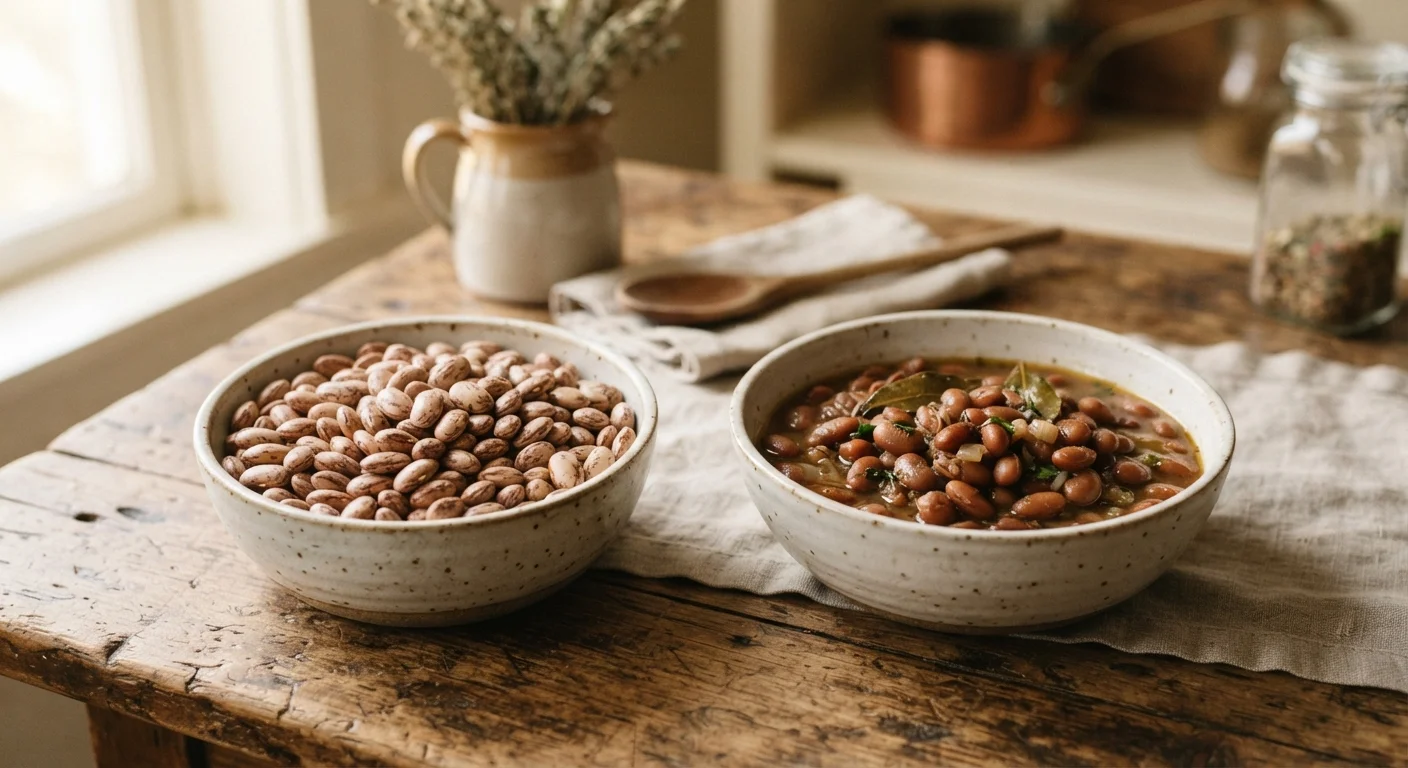
Option A
Dried beans
The economical, long-haul pantry option.
Best for: Families who cook in bulk, meal prep on weekends, and want the lowest cost per serving.
Option B
Canned beans
The convenient, ready-when-you-need-it choice.
Best for: Households that need a fast, reliable protein on weeknights with minimal planning.
The real cost difference
A one-pound bag of dried pinto or black beans costs roughly $1.50 to $2.00 at most US grocery stores and yields about 6 cups of cooked beans. A 15-ounce can of the same bean holds about 1.5 cups of cooked beans and typically runs $0.80 to $1.50. That puts canned beans at roughly $3.20 to $6.00 for the equivalent cooked volume, compared to $1.50 to $2.00 for dried.
For a family eating beans twice a week, that gap adds up to $100 to $200 per year depending on local prices and the varieties chosen. Dried beans also go on sale frequently and store well, so buying in bulk when prices drop increases the savings further.
One caveat: if you factor in the cost of running a stovetop for 90 minutes of simmering, the electricity or gas cost narrows the gap slightly. A pressure cooker or Instant Pot reduces cook time to 25 to 40 minutes and largely eliminates that concern.
| Criterion | Dried beans | Canned beans |
|---|---|---|
| Cost per 1.5 cups cooked | ~$0.40 to $0.60 | ~$0.80 to $1.50 |
| Active prep time | 5 to 10 minutes | 2 minutes |
| Total time to table | 2 to 10 hours (with soak) | Under 5 minutes |
| Sodium per half-cup serving | Near zero | 300 to 500 mg (before rinsing) |
| Shelf life (unopened) | 1 to 2 years | 2 to 5 years |
| Texture control | High | Low to moderate |
| Batch cooking suitability | Excellent | Limited |
Time, planning, and convenience
Dried beans require planning. Traditional stovetop preparation involves an overnight soak (or a quick-soak in boiling water for an hour), followed by 60 to 90 minutes of simmering. Skipping the soak is possible, but it extends cook time and can produce less even results.
Canned beans sidestep all of that. Open, rinse, and use. For families without predictable weeknight schedules, that reliability matters. A can of black beans can turn leftover rice into dinner in 15 minutes.
A practical middle ground: cook a large batch of dried beans on Sunday, then refrigerate or freeze portions. Cooked beans keep in the refrigerator for up to five days and freeze well for three months, giving you the cost benefit of dried with near-canned convenience on weeknights.
Nutrition: where the differences actually lie
Dried and canned beans are nutritionally close in protein, fiber, and most micronutrients. The meaningful difference is sodium. A standard can of beans contains 300 to 500 mg of sodium per half-cup serving. Rinsing canned beans under cold water for 30 seconds removes roughly 40 percent of that sodium, which helps but does not eliminate it. Dried beans cooked without added salt contain near-zero sodium.
Texture is another factor. Dried beans cooked carefully have a firmer, creamier texture that holds up better in soups, stews, and grain bowls. Canned beans can turn mushy when cooked a second time, which matters in recipes where bean integrity affects the dish.
~40%
Sodium removed by rinsing canned beans
Research published in food science literature has found that rinsing canned legumes under water for 30 seconds reduces sodium content by roughly 40 percent.
6 cups
Cooked yield from one pound of dried beans
One pound of dried beans is a standard US bag size and typically yields about six cups of cooked beans, equivalent to roughly four 15-ounce cans.
25 min
Pressure cooker cook time for most dried beans
Most varieties of dried beans, including black, pinto, and navy, cook fully in 25 to 40 minutes under high pressure, without pre-soaking.
When canned beans win outright
Canned beans are genuinely better in several real-world situations. Speed is the obvious one. But they also remove the variables that trip up newer cooks: older dried beans (sometimes sold without a harvest date) can take twice as long to soften and never fully tenderize. Canned beans are consistent every time.
They are also useful for small households. A single person or couple cooking for two may never work through a pound of dried beans before quality degrades, making a can the more practical purchase. And for camping, dorm cooking, or any situation without a full kitchen, canned beans need no equipment at all.
Households managing chronic conditions that require sodium monitoring should still prefer rinsed canned beans over no beans at all. The fiber and protein benefits are worth the trade-off in most cases, though anyone managing a specific medical diet should confirm choices with a qualified healthcare professional rather than relying on general guidance.
The content provided on our blog site traverses numerous categories, offering readers valuable and practical information. Readers can use the editorial team’s research and data to gain more insights into their topics of interest. However, they are requested not to treat the articles as conclusive. The website team cannot be held responsible for differences in data or inaccuracies found across other platforms. Please also note that the site might also miss out on various schemes and offers available that the readers may find more beneficial than the ones we cover.