

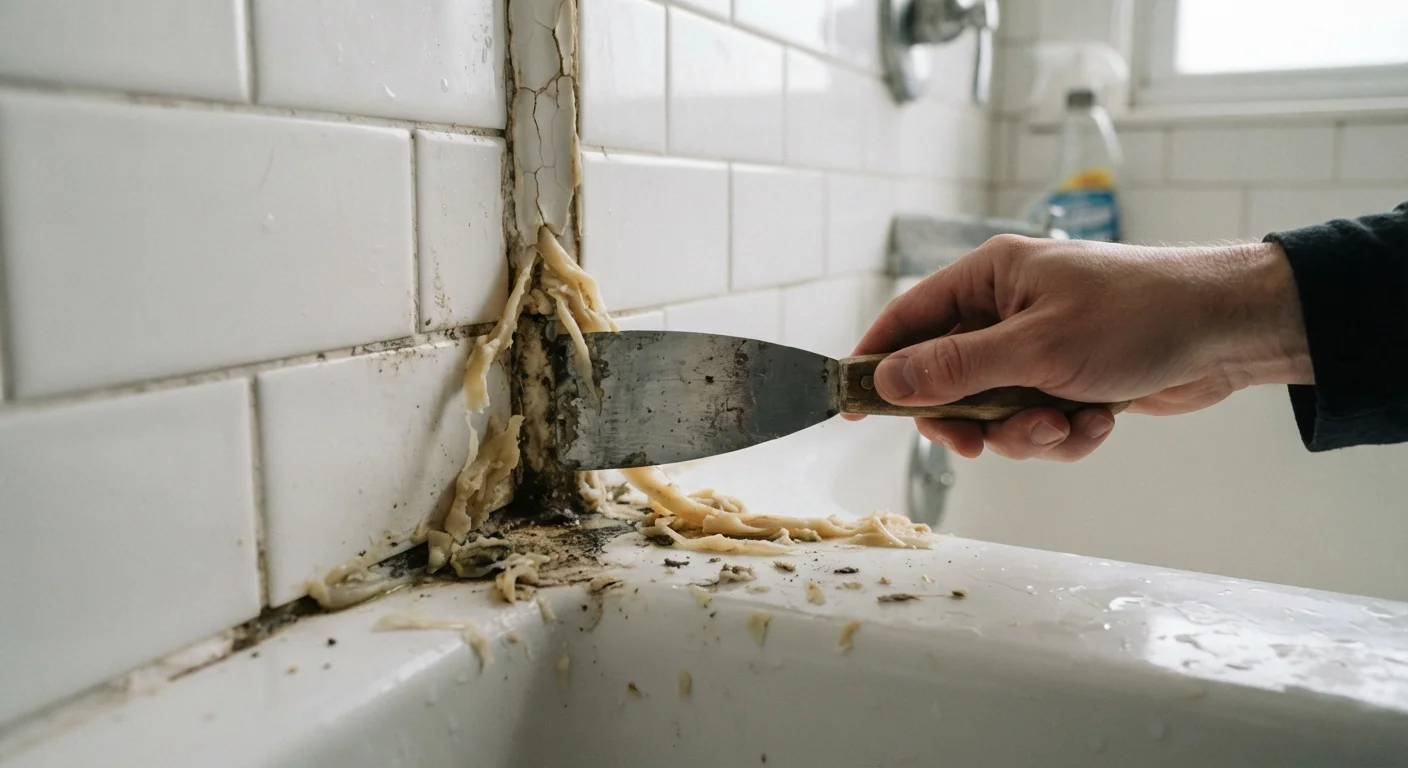
Why caulk fails so fast
A caulk bead that peels within a few months is almost always a sign of a preparation problem. The caulk itself is rarely the cause. Adhesion depends entirely on what the caulk is bonding to: if that surface is damp, contaminated, or already covered in an old bead, the new application has nothing solid to grip.
Many homeowners assume that a higher-priced product will compensate for a rushed job. It will not. A mid-range bathroom caulk applied correctly to a clean, dry joint will outlast a premium product applied to a wet surface every time.
The sections below describe the specific mistakes that shorten caulk life, why they are common, and what to do instead.
Common mistakes that shorten caulk life
The following errors appear repeatedly in failed caulk jobs around tubs, windows, and door frames. Each one is avoidable with the right sequence of steps.
Applying new caulk directly over old caulk without removing the existing bead first.
Why it happens: Removing old caulk is tedious and time-consuming, so many people skip it hoping the new layer will seal over the old one.
Caulking a wet or damp surface, especially around tubs and showers.
Why it happens: Bathrooms are rarely fully dry, and people often caulk immediately after cleaning the area with water.
Using interior latex caulk in high-moisture areas like tub surrounds and shower seams.
Why it happens: Latex caulk is cheaper and easier to clean up, so it gets used where silicone or siliconized latex would perform far better.
Skipping surface cleaning before application, leaving soap scum, grease, or dust in the joint.
Why it happens: The joint may look clean to the eye, but invisible residue from cleaning products and body oils prevents adhesion.
Pulling the caulk gun too slowly and applying an uneven, thick bead.
Why it happens: New applicators often move slowly, thinking more product means a better seal.
Using the caulked surface too soon, before the caulk has fully cured.
Why it happens: Many caulks feel dry to the touch within an hour or two, which gives the impression they are ready for use.
Never caulk over mold without treating it first
Caulking over visible mold or mildew traps moisture and organic material beneath the surface. The mold continues to grow underneath and will breach the new caulk within weeks. Clean the area with a mold-killing solution approved for bathroom surfaces and allow it to dry fully before applying any caulk.
Beyond mold, one additional issue worth noting: window and exterior caulk joints also fail when the wrong product is used. Paintable latex caulk works for window trim on the interior, but exterior joints exposed to sun and temperature swings need an elastomeric or polyurethane formula rated for outdoor use.
Getting the prep right every time
Silicone caulk requires proper ventilation
Silicone caulk releases acetic acid as it cures, producing a strong vinegar-like smell. Work in a well-ventilated space and avoid prolonged exposure in enclosed bathrooms. Allow the area to air out during and after application.
The prep sequence that gives caulk the best chance is straightforward. Remove all old caulk first. Clean with isopropyl alcohol. Allow the joint to dry completely, which can take longer than expected in a bathroom without good air circulation. Then apply caulk in a single steady pass and tool the bead before it skins.
One step many people skip: filling the tub with water before caulking around it. Tubs flex slightly under load, and caulk applied to an empty tub can crack the first time someone steps in. Filling the tub first simulates the loaded position and gives the caulk the right amount of give.
Caulk is not a permanent fix for large structural gaps or grout failures. If tiles are loose or the substrate behind them is damaged, no amount of caulk will hold long-term. Those situations call for a proper tile repair before any surface sealing.
The content provided on our blog site traverses numerous categories, offering readers valuable and practical information. Readers can use the editorial team’s research and data to gain more insights into their topics of interest. However, they are requested not to treat the articles as conclusive. The website team cannot be held responsible for differences in data or inaccuracies found across other platforms. Please also note that the site might also miss out on various schemes and offers available that the readers may find more beneficial than the ones we cover.