

Option A
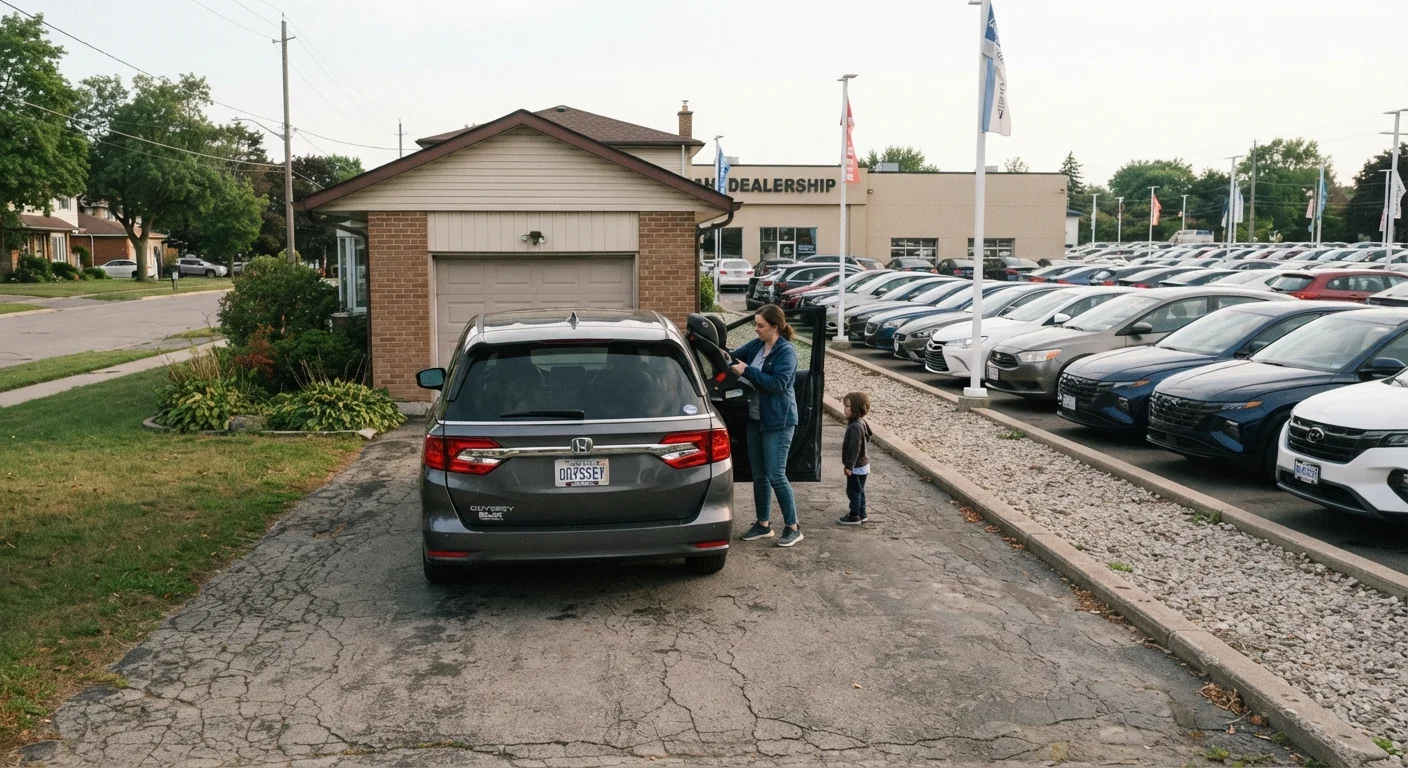
Buying a used car
The ownership path with lower long-term costs and no mileage limits.
Best for: Families who drive heavily, want to build equity, and can handle occasional repair costs.
Option B
Leasing a new car
The lower monthly payment option with a predictable maintenance window.
Best for: Families who want a new vehicle every few years and keep annual mileage within lease limits.
How the monthly numbers actually compare
The monthly payment gap between leasing and financing looks appealing on paper. Leasing a new mid-size SUV commonly runs $350 to $500 per month. Financing that same vehicle new might cost $550 to $700 per month. A used version of a comparable three-year-old SUV, financed over 60 months, might run $300 to $450 per month depending on the purchase price, down payment, and interest rate.
So on a month-to-month basis, leasing and buying used can land close to each other. The gap widens when you look past the payment. A lease includes gap coverage in many cases and keeps you in warranty, but it also locks in fees for excess mileage, wear charges at return, and a disposition fee (typically $300 to $500) when you hand the keys back. A used car loan eventually ends, and the monthly cost drops to zero while you still own an asset.
| Criterion | Buying a used car | Leasing a new car |
|---|---|---|
| Typical monthly payment | $300 to $450 | $350 to $500 |
| Ownership at end of term | Yes, own the vehicle | No, return the car |
| Mileage limits | None | 10,000 to 15,000 per year |
| Warranty coverage | Limited or expired | Full factory warranty |
| Repair risk | Moderate to high | Low during lease term |
| Early exit cost | Sell or trade anytime | Early termination fees apply |
| 5-year net cost (estimated) | $12,000 to $17,000 after resale | $28,000 to $34,000, nothing owned |
| Insurance requirements | Standard coverage | Higher minimums required |
Total cost over three to five years
Running the full three-year cost on a leased new SUV with a $3,000 drive-off, $425 monthly payments, and modest end-of-lease fees often lands around $18,000 to $20,000 spent with nothing owned at the end. Over five years with two consecutive three-year leases, that total climbs to $30,000 or more.
A used SUV bought for $22,000 with a $2,000 down payment, financed at a typical used-car rate over 60 months, may cost roughly $22,000 to $25,000 in total payments. After five years, you own a vehicle worth $8,000 to $12,000 depending on condition and market. The net cost, after subtracting resale value, often falls well below the leasing path.
Repair costs narrow that gap. A used vehicle outside its original warranty may need $500 to $2,000 in repairs over five years, a wide range depending on make, model, and maintenance history. The pre-purchase inspection checklist can help you avoid vehicles with expensive problems already underway.
$0.20/mile
Common lease mileage overage fee
Lease contracts commonly charge $0.15 to $0.25 per mile over the annual limit, according to general industry contract terms.
~$500
Typical lease disposition fee at return
Most lease agreements include a disposition fee of $300 to $500 due when you return the vehicle without leasing or buying again from the same brand.
60 months
Typical used car loan term
A 60-month loan on a used vehicle is common; once paid off, monthly transportation costs drop to zero while ownership continues.
Mileage, lifestyle, and flexibility
Families with school runs, sports practices, road trips, and commutes can easily cover 18,000 to 20,000 miles per year. Standard lease contracts allow 10,000 to 15,000 miles annually. At $0.20 per mile over the limit, a family driving 18,000 miles on a 12,000-mile lease pays $1,200 in overage fees each year, or $3,600 over a 36-month term. That erases most of the monthly payment advantage.
Used car ownership sets no mileage ceiling. You can drive as much as the vehicle mechanically allows without penalty. That alone makes ownership a stronger fit for high-mileage family driving patterns.
Flexibility cuts both ways. A lease locks you in for the contract term; breaking it early typically costs several months of remaining payments. Selling a used car early is simpler, though you may owe more than the car is worth if you financed with a small down payment on a vehicle that depreciated quickly. For a broader picture of how driving choices affect family budgets, comparing road trip costs to flying puts vehicle expenses in a wider context.
Insurance, taxes, and the costs people forget
Lease agreements require the lessee to carry higher insurance coverage levels, typically comprehensive and collision with low deductibles specified by the leasing company. On a new vehicle, that coverage costs more than on a used one simply because the insured value is higher. The difference can run $200 to $600 per year depending on the vehicle and the driver's record.
Sales tax treatment varies by state. Some states tax the full vehicle purchase price upfront on a buy; others tax only the monthly lease payments, which spreads the tax burden over time. That distinction matters for families managing cash flow.
Registration fees are higher on newer, more expensive vehicles in most states, as fees are often tied to vehicle value. A three-year-old used car typically carries lower annual registration costs than a brand-new leased vehicle.
Anyone going through the full purchase or lease process for the first time will find the family car shopping walkthrough useful for understanding each cost category before signing anything.
The content provided on our blog site traverses numerous categories, offering readers valuable and practical information. Readers can use the editorial team’s research and data to gain more insights into their topics of interest. However, they are requested not to treat the articles as conclusive. The website team cannot be held responsible for differences in data or inaccuracies found across other platforms. Please also note that the site might also miss out on various schemes and offers available that the readers may find more beneficial than the ones we cover.