

Summary
22 items · 45 to 90 minutes per vehicle
Why a structured inspection matters
Buying a used vehicle without a systematic check is one of the more predictable ways a family budget takes a hit. A car that looks clean at a glance can carry hidden repair needs worth several thousand dollars. Working through a consistent checklist on every vehicle you consider helps you compare candidates fairly and walk away from bad deals before money changes hands.
This checklist covers four areas: documentation, exterior condition, mechanical condition, and the test drive. Use it in order. Documentation problems can disqualify a vehicle immediately, so there is no point spending an hour under the hood of a car with a salvage title. See the full family car shopping walkthrough for context on how this inspection fits into the broader purchase process.
Salvage and rebuilt titles carry real risks
A vehicle with a salvage or rebuilt title has been declared a total loss by an insurer at some point. These vehicles can be harder to insure, may not qualify for certain financing, and carry structural uncertainty even after repairs. If a history report shows a salvage or rebuilt title, factor those limitations into your decision rather than treating the vehicle the same as a clean-title car.
What to bring and who to bring
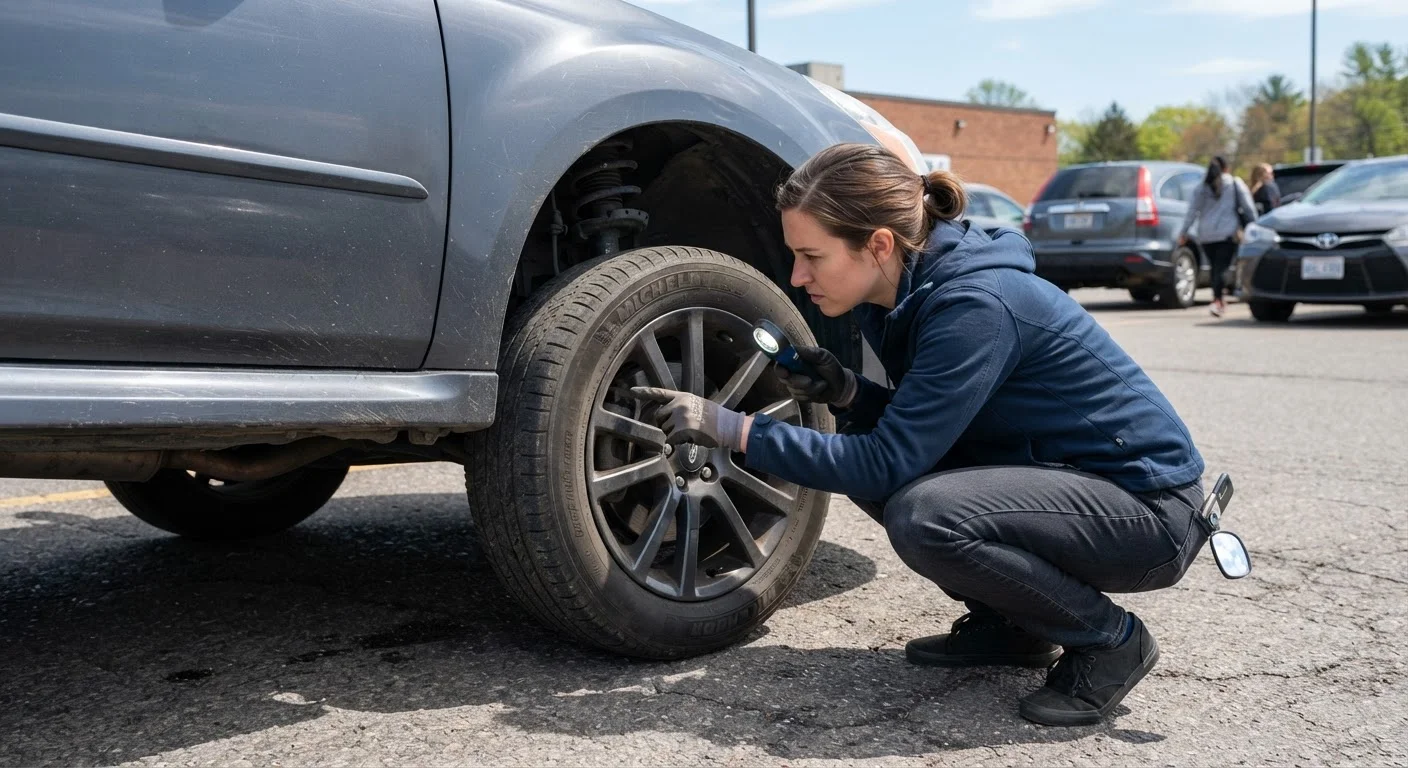
Arrive prepared. Bring a flashlight for inspecting dark areas under the hood and beneath the car. A magnet can help detect body filler in repaired panels. Wear clothes you can crouch and move around in. If you are not comfortable reading a vehicle on your own, schedule an independent pre-purchase inspection with a licensed mechanic: the typical cost runs $100 to $150 and is money well spent.
Avoid inspecting a vehicle in the rain or low light. Wet paint hides overspray and color mismatches. Dim conditions make it hard to assess rust, tire wear, and fluid levels accurately.
Flashlight
Needed to inspect dark areas under the hood, beneath the car, and inside the trunk.
Refrigerator magnet
Used to detect body filler beneath paint on repaired body panels.
VIN decoder or vehicle history service
Retrieves accident history, title status, odometer records, and previous ownership data.
Tread depth gauge
Measures remaining tire tread depth more accurately than the penny test alone.
OBD-II scanner
Reads stored diagnostic trouble codes from the vehicle's computer, including codes that do not trigger a visible warning light.
Independent mechanic
Performs a full pre-purchase inspection covering components you cannot easily evaluate yourself.
Working through the checklist
Go through each group in sequence. If a vehicle fails any must item, stop and decide whether to walk away before investing more time. For should and nice-to-have items, note problems and factor repair estimates into your price discussion. Dealers and private sellers can often be negotiated down when you document specific defects rather than making general objections.
Documentation
Exterior condition
Under the hood and mechanical
Test drive
If the vehicle passes the checklist and you decide to move forward, compare the true cost of ownership against other options. The used versus leasing cost comparison lays out how the numbers typically work for families over several years. Understanding upcoming maintenance needs also helps: your car's maintenance schedule explains which services matter most and when.
The content provided on our blog site traverses numerous categories, offering readers valuable and practical information. Readers can use the editorial team’s research and data to gain more insights into their topics of interest. However, they are requested not to treat the articles as conclusive. The website team cannot be held responsible for differences in data or inaccuracies found across other platforms. Please also note that the site might also miss out on various schemes and offers available that the readers may find more beneficial than the ones we cover.