

Our Verdict
Electric vehicles can deliver genuine long-term savings on fuel and maintenance for families who drive frequently and can charge at home. The upfront cost is still higher than comparable gas vehicles, and charging logistics require honest planning before buying. For families who take frequent long road trips or live where public charging is sparse, the trade-offs deserve serious weight.
Families who commute regularly, have access to home charging, and can absorb a higher purchase price are best positioned to benefit from EV ownership.
What EVs actually cost to operate
Electricity is cheaper per mile than gasoline in most U.S. regions. The U.S. Department of Energy has consistently found that the average cost to drive an electric vehicle is lower per mile than a comparable gasoline vehicle, though the exact gap depends on local electricity rates and gas prices, both of which fluctuate.
Maintenance costs are also lower. EVs have no oil changes, fewer brake replacements (regenerative braking reduces wear), and no transmission fluid, timing belt, or exhaust system to service. A family driving 15,000 miles per year can reasonably expect to spend less on routine upkeep over five years in an EV than in a gas vehicle of similar size.
Federal tax credits under the Inflation Reduction Act can reduce the purchase price by up to $7,500 for qualifying new vehicles, but eligibility is tied to household income limits and vehicle MSRP caps. Used EVs may qualify for a separate credit. Families should verify their specific eligibility with a tax professional before counting on those figures.
Lower fuel cost per mile than gasoline
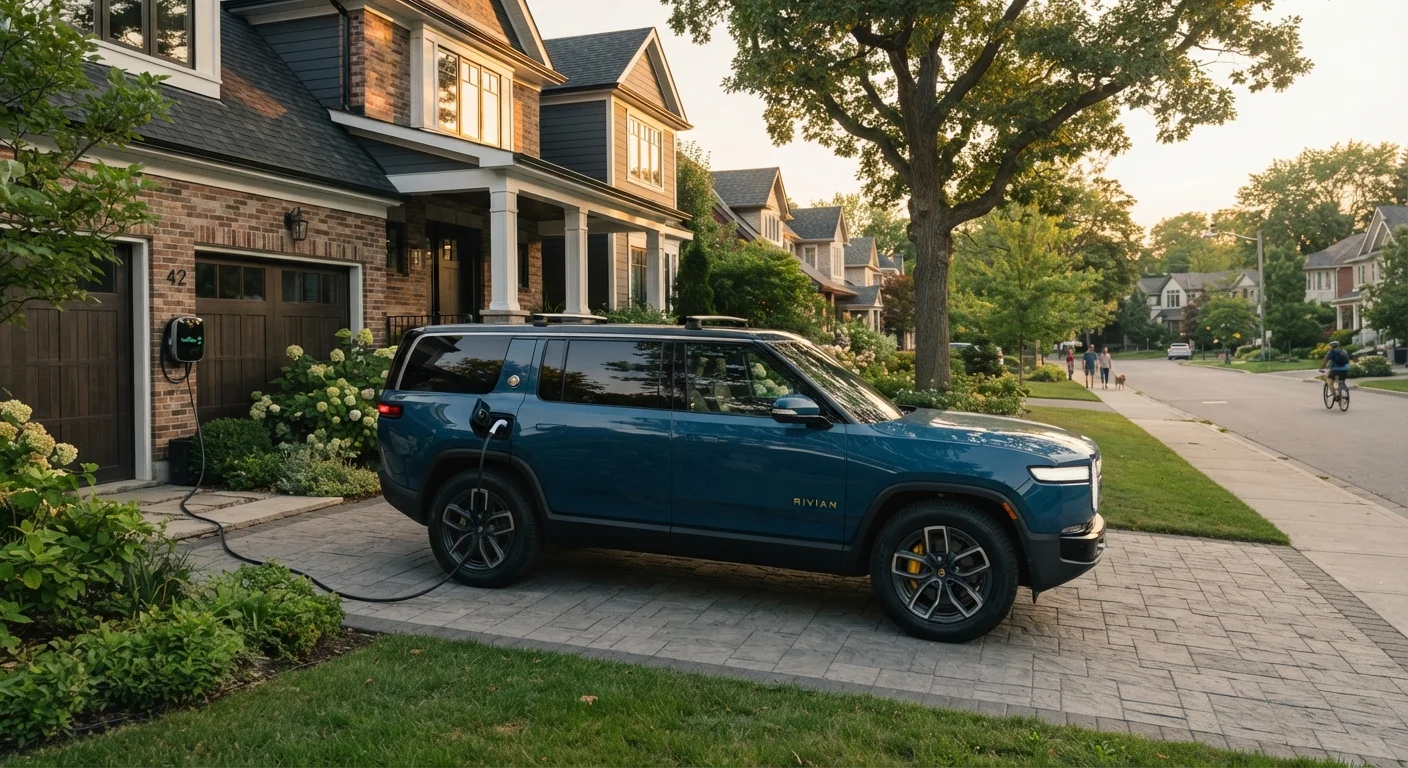
Electricity costs less per mile driven than gasoline in most U.S. markets, and home charging at off-peak rates widens that gap further. Families with high annual mileage see the savings accumulate faster.
Significantly reduced routine maintenance
No oil changes, no transmission service, and regenerative braking extends brake pad life. Fewer scheduled service visits translates to real dollar savings over time.
Home charging adds daily convenience
Plugging in overnight means starting each day with a full charge, removing the need to stop at a gas station for typical daily driving.
Federal tax credits can reduce purchase price
Qualifying buyers may receive up to $7,500 off a new EV through federal tax credits, with a separate credit available for used EVs. Income and vehicle price limits apply.
Smooth, quiet driving experience
Instant torque and minimal cabin noise are commonly cited by EV owners as practical benefits, particularly for families with young children on long trips.
The real barriers to EV ownership for families
Purchase prices for electric vehicles, particularly family-sized SUVs and crossovers, remain higher than their gas counterparts on average. That gap is narrowing but has not closed. Families financing a vehicle will carry that difference in monthly payments for years, which can offset fuel savings in the short term.
Charging at home is the most convenient option, but not everyone can do it easily. Renters, condo owners, and households without a garage may have no practical way to install a Level 2 charger. Even homeowners face installation costs that typically run between $400 and $1,200 for the charger and wiring work, depending on the home's electrical panel capacity.
Public charging networks have grown substantially, but coverage is uneven. Rural areas and smaller cities often have fewer fast chargers, and reliability varies. A family accustomed to stopping at any gas station has less flexibility in an EV.
Higher upfront purchase price
Electric family vehicles typically cost more to purchase than comparable gas models. Monthly financing costs reflect that difference even when fuel savings partially offset it over time.
Home charging is not accessible to everyone
Renters, apartment dwellers, and homes with outdated electrical panels may have no practical path to Level 2 home charging, removing one of the main convenience advantages.
Public charging infrastructure is uneven
Fast charger availability varies widely by region. Families in rural areas or smaller cities may encounter gaps in coverage that make longer trips genuinely inconvenient.
Road trips require more planning and time
Charging stops on long trips take longer than gas fill-ups, and route planning around charger locations adds complexity that gas-vehicle owners do not face.
Battery replacement is a long-term cost variable
While most batteries are warranted for eight years or 100,000 miles, out-of-warranty replacement can cost several thousand dollars and should factor into ownership calculations beyond the warranty period.
Road trips and range: what families need to know
Most modern EVs offer between 200 and 300 miles of real-world range, which covers the average American's daily driving many times over. Road trips are a different situation. Charging stops add time that a gas fill-up does not, and fast chargers (DC fast chargers, which can add significant range in 20 to 30 minutes) are not available everywhere along every route.
Families who regularly drive long distances should map charging infrastructure along their common routes before buying. Apps and planning tools from charging networks can help, but there is no substitute for checking whether the stops work for your specific trip patterns. If most family driving is local, this concern carries less weight.
For a broader look at how vehicle costs compare across ownership structures, see how buying used compares to leasing new for families over several years.
$7,500
Maximum federal EV tax credit for new vehicles
Under the Inflation Reduction Act, qualifying buyers may receive up to $7,500 off a new EV purchase, subject to income and vehicle price limits.
8 years / 100K miles
Typical EV battery warranty period
Most major EV manufacturers warrant the battery pack for eight years or 100,000 miles, whichever comes first.
$400-$1,200
Typical home Level 2 charger installation cost
Installation costs vary based on the home's existing electrical capacity and local labor rates; some homes with older panels may face higher costs.
Questions to work through before deciding
An honest evaluation starts with where and how your family charges. If home charging is not accessible, the daily convenience advantage disappears, and public charging costs reduce the fuel savings margin. Calculate what you actually pay per mile today versus what you would pay charging locally.
Consider your typical driving patterns. A family with two daily commuters covering 40 to 60 miles combined will see fuel savings faster than one that drives infrequently. Long-haul travel frequency matters too.
Battery replacement is a legitimate long-term concern. Most manufacturers warrant EV batteries for eight years or 100,000 miles, but replacement outside warranty can cost several thousand dollars. That figure has been falling as battery technology matures, but it remains a real variable in a long ownership calculation.
When you are ready to shop, the full family car shopping process covers how to evaluate, budget, and negotiate a purchase. And once you are at a dealership, knowing where families tend to lose ground can help you avoid common missteps.
The content provided on our blog site traverses numerous categories, offering readers valuable and practical information. Readers can use the editorial team’s research and data to gain more insights into their topics of interest. However, they are requested not to treat the articles as conclusive. The website team cannot be held responsible for differences in data or inaccuracies found across other platforms. Please also note that the site might also miss out on various schemes and offers available that the readers may find more beneficial than the ones we cover.