

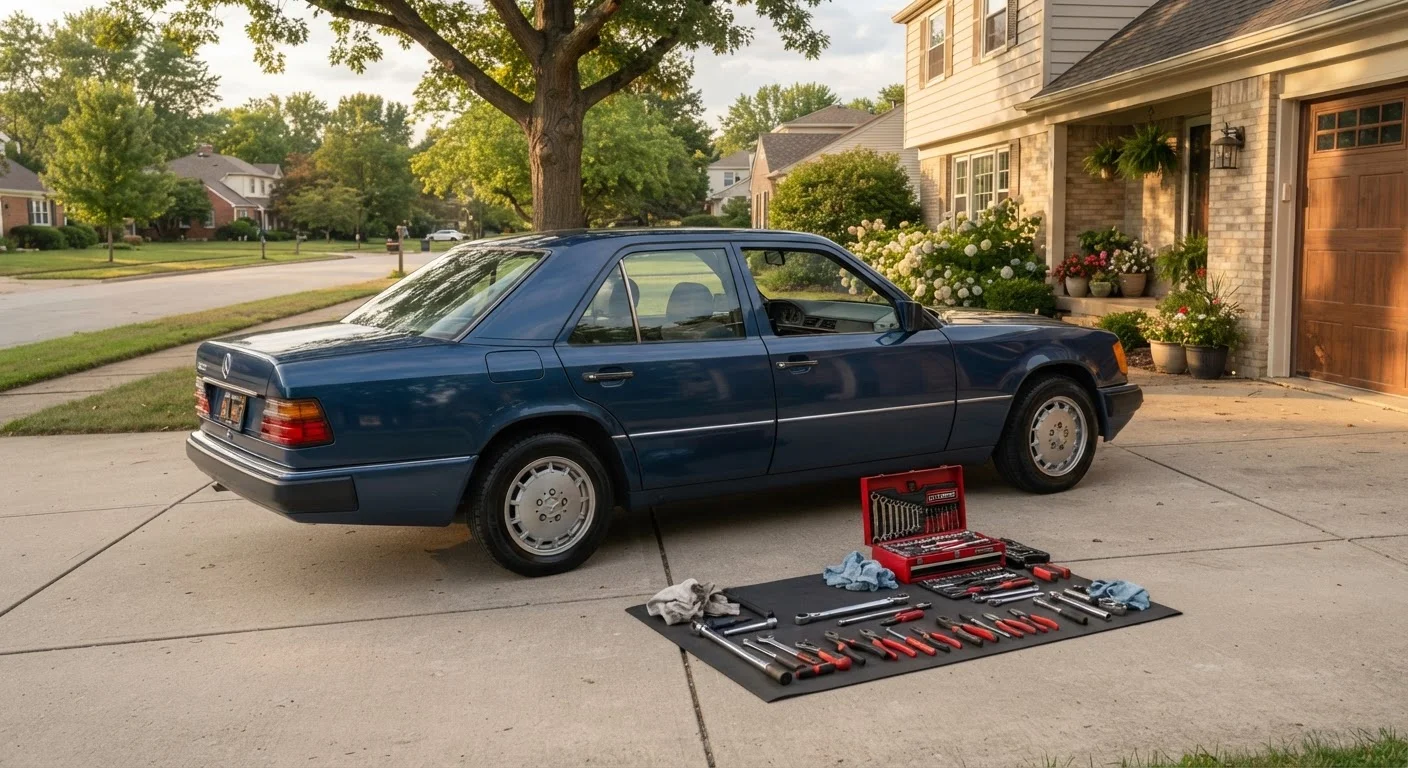
Why high-mileage cars need a different approach
A car with 100,000 or more miles on it is not a liability by default. Many vehicles are engineered to run well past 200,000 miles when maintained properly. The problem is that owners often apply the same maintenance habits they used during the first 75,000 miles, without adjusting for the increased wear on seals, hoses, belts, and gaskets that accumulates over time.
Older components lose flexibility and tolerance for neglect. A timing belt that could wait an extra 5,000 miles at 60,000 miles may not have that cushion at 120,000. See what your car's maintenance schedule is actually telling you for a breakdown of which intervals genuinely matter versus which ones are conservative padding.
The core principle is straightforward: prevention is cheaper than repair at every mileage, but the gap widens as vehicles age.
Practices that protect a high-mileage vehicle
These are the habits that separate owners who spend $300 per year on maintenance from those who spend $3,000 on avoidable repairs.
Switch to higher-viscosity or high-mileage-formula oil at the intervals your owner's manual specifies.
Engine seals and gaskets shrink slightly as they age, and high-mileage oil formulas contain conditioners that slow further degradation. Skipping oil changes or stretching intervals too far accelerates sludge buildup, which is one of the most common causes of expensive engine damage in older vehicles.
Inspect and replace rubber components, including belts, hoses, and gaskets, before they fail rather than after.
Rubber degrades over time regardless of mileage. A burst coolant hose or a snapped serpentine belt can strand a vehicle and, in some cases, cause secondary engine damage that costs thousands more than the original part. Most belts and hoses are inexpensive; the labor to replace them preventively is far less than emergency roadside repair plus towing.
Flush and refill coolant on schedule and watch the temperature gauge consistently.
Coolant degrades chemically over time and loses its ability to prevent corrosion inside the cooling system. Overheating a high-mileage engine even once can warp cylinder heads, a repair that often exceeds $1,500. Checking coolant condition twice a year costs almost nothing.
Check tire pressure monthly and rotate tires every 5,000 to 7,500 miles.
Underinflated tires wear unevenly, reduce fuel economy, and strain suspension components that are already under stress on older vehicles. Consistent rotation extends tire life by balancing wear across all four corners, which delays the cost of replacement.
Address warning lights within days, not weeks.
Check engine lights and other warning indicators on older vehicles often signal issues that are inexpensive at first but compound quickly. An oxygen sensor fault left unresolved can damage a catalytic converter, turning a $150 sensor replacement into a $900 or more repair.
Where to start if you are behind on maintenance
If you bought a used vehicle without a complete service history, or if maintenance has lapsed, start with a full inspection at an independent shop rather than a dealership. Independent mechanics typically charge less for diagnostic time and have no incentive to recommend services tied to manufacturer promotions.
Prioritize fluids and filters first, then belts and hoses, then brakes. Cosmetic or comfort issues can wait. If the inspection reveals multiple expensive repairs at once, get a written estimate and compare the total against what the vehicle is worth. A transmission rebuild on a car worth $4,000 may not be the right financial decision, but a $400 cooling system repair almost always is.
Fuel economy on high-mileage vehicles often drops gradually, which owners mistake for normal aging. Dirty fuel injectors, a clogged air filter, or worn spark plugs are common culprits. Fixing them can restore noticeable efficiency. The fuel economy myths that cost drivers money article covers which fixes actually move the needle.
When repair cost crosses the line
No maintenance strategy eliminates every repair. The question is when a single repair or a cluster of repairs tips the math toward replacing the vehicle instead.
A widely cited rule of thumb is to avoid any single repair that exceeds the vehicle's current market value, or multiple repairs in one year that together exceed that value. This is a general starting point, not a guarantee. A car worth $5,000 that needs $1,800 in brake and suspension work may still be worth fixing if it is otherwise sound. The same car needing a $4,500 engine rebuild deserves harder scrutiny.
If you are evaluating whether to keep a high-mileage vehicle or move on, what to check before buying a used car gives useful context for understanding what sound mechanical condition actually looks like, which helps calibrate whether your current car still qualifies.
The content provided on our blog site traverses numerous categories, offering readers valuable and practical information. Readers can use the editorial team’s research and data to gain more insights into their topics of interest. However, they are requested not to treat the articles as conclusive. The website team cannot be held responsible for differences in data or inaccuracies found across other platforms. Please also note that the site might also miss out on various schemes and offers available that the readers may find more beneficial than the ones we cover.