

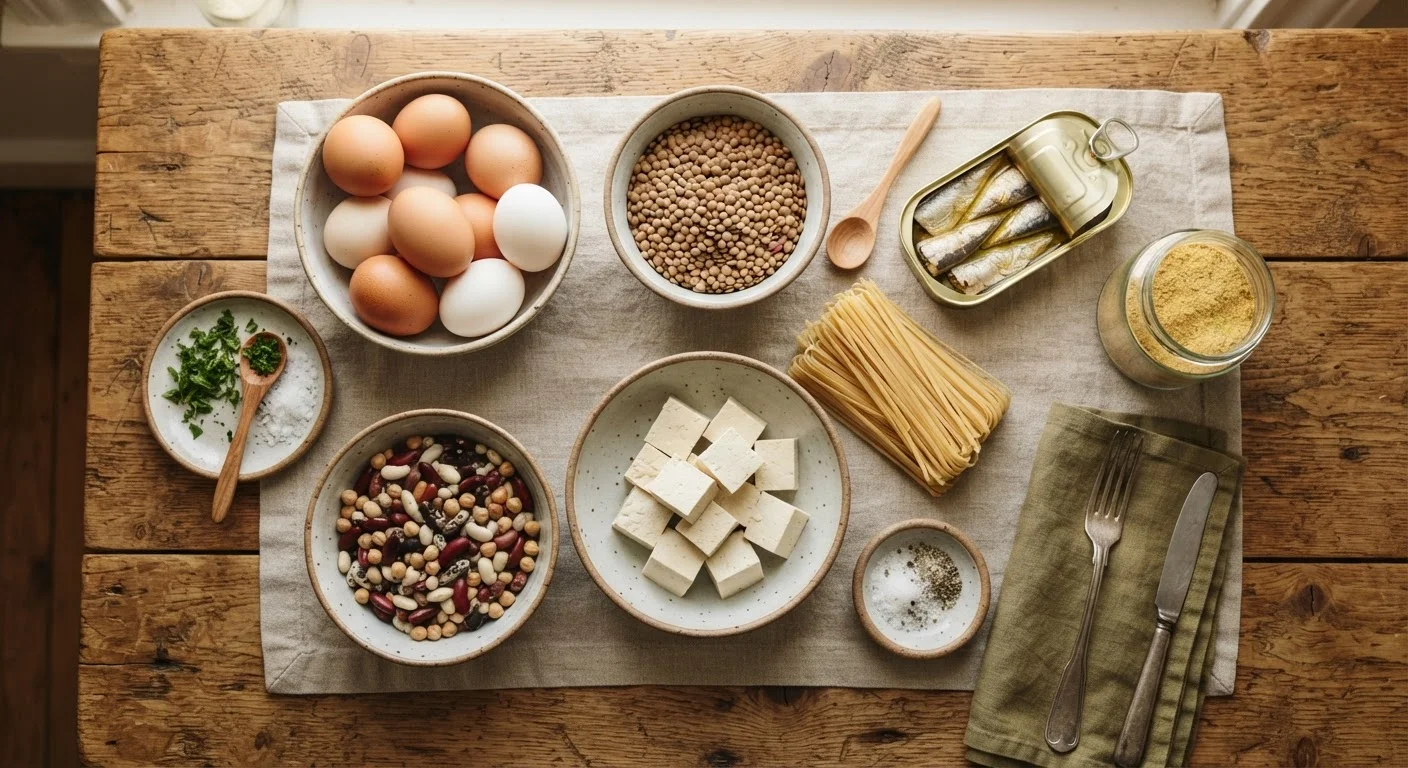
Why protein cost matters for family grocery budgets
Protein is the macronutrient most families overspend on. Boneless chicken breasts, lean ground beef, and deli meat are convenient, but their per-pound price adds up fast, especially when cooking for four or more people several nights a week. The good news is that a wide range of foods deliver comparable protein per serving at a fraction of the price, and many of them have been recommended by registered dietitians for years precisely because they also supply fiber, vitamins, and minerals that expensive cuts of meat may lack.
The list below focuses on sources that are widely available at mainstream US grocery stores, realistic for family cooking, and consistently affordable regardless of seasonal price swings. For more context on keeping the whole grocery bill manageable, see strategies for stretching a grocery budget.
Eggs
A dozen large eggs costs roughly $2 to $4 at most US grocery stores, putting the per-serving cost (two eggs) at well under $1. Each serving supplies around 12 grams of complete protein, meaning it contains all nine essential amino acids the body cannot make on its own. Eggs are also one of the few food sources of choline, a nutrient important for brain function, and they contain vitamin D and B12.
From a cooking standpoint, eggs are one of the most flexible proteins in any kitchen. Scrambled, hard-boiled for packed lunches, folded into fried rice, or baked into a frittata with whatever vegetables need using up, they fit into breakfast, lunch, and dinner without requiring much prep time.
At under $1 per two-egg serving, eggs are hard to beat for complete protein on a tight budget.
Dried lentils
A one-pound bag of dried lentils typically costs $1.50 to $2.50 and yields roughly eight to ten half-cup servings once cooked, each supplying about 9 grams of protein along with around 8 grams of fiber. Unlike most dried legumes, lentils require no soaking. They cook in 20 to 30 minutes, which makes them practical even on weeknights.
Red lentils break down into a thick, creamy texture ideal for soups and dal. Green and brown lentils hold their shape and work well in salads, grain bowls, or as a meat extender in tacos and pasta sauce. The fiber content also means lentils are filling, so a pot goes a long way when feeding a family.
Dried lentils cost roughly 20 to 30 cents per serving and need no overnight soaking.
Canned sardines and salmon
Canned sardines run about $1.50 to $3 per can, and canned salmon is typically $2 to $4 per can, both of which can serve one to two people. Beyond protein (roughly 20 grams per serving), both fish supply long-chain omega-3 fatty acids, which are harder to get from plant foods. Sardines eaten with their soft, edible bones also deliver a notable amount of calcium.
Both work well mashed onto whole-grain crackers, stirred into pasta, or mixed into a quick salad. Sardines have a stronger flavor that some family members may need time to warm up to; starting with milder preparations such as tomato-based pasta sauce can help with introduction. Canned salmon is milder and substitutes well in any recipe calling for canned tuna.
Canned salmon and sardines deliver omega-3 fatty acids alongside protein at a cost far below fresh fish.
Dried beans (black, pinto, navy, chickpeas)
Dried beans are among the least expensive proteins per gram available in US stores. A one-pound bag costing around $1.50 to $2 yields the equivalent of roughly three to four cans of beans once cooked, which would cost $3 to $6 separately. Each half-cup serving of cooked beans supplies 7 to 9 grams of protein and similar amounts of fiber.
The main trade-off is time: most dried beans benefit from an overnight soak followed by an hour or more of simmering. Batch cooking once or twice a week and storing beans in the refrigerator or freezer solves this. Chickpeas, black beans, and pinto beans are versatile enough to move between soups, tacos, grain bowls, and dips without much effort. For families building a broader approach to eating well on a budget, evidence-informed strategies for healthy eating on a tight budget covers the broader framework.
A pound of dried beans yields three to four times as many servings as the equivalent in canned beans at the same price.
Cottage cheese
A 16-ounce container of cottage cheese costs roughly $2.50 to $4 at most stores and provides four half-cup servings, each with about 14 grams of protein. It is a high-casein dairy protein, which digests more slowly than whey, making it filling over a longer period. It is also low in fat in its 2% and fat-free versions, though the full-fat version suits families who want more calories per serving.
Cottage cheese works as a standalone snack, blended into smoothies, or spooned over fruit. It also substitutes for ricotta in lasagna and baked pasta dishes at a lower cost, which is a useful swap for larger family portions.
Cottage cheese supplies around 14 grams of slow-digesting protein per half-cup for well under $1 per serving.
Tofu
A 14-ounce block of firm tofu costs $2 to $3.50 at most mainstream grocery stores and yields three to four servings of roughly 10 grams of protein each. Tofu is a complete protein derived from soybeans, and it contains iron and calcium (particularly in calcium-set varieties). It is also one of the few plant proteins with a digestibility score comparable to animal proteins.
Firm tofu holds up to pan-frying, baking, and grilling. Silken tofu works in smoothies, scrambled egg-style preparations, and sauces. The texture and neutral flavor mean tofu absorbs whatever seasoning surrounds it, which makes it adaptable in cuisines from stir-fries to tacos. Pressing firm tofu for 20 to 30 minutes before cooking removes excess moisture and produces a firmer, less watery result.
Tofu is one of the few plant proteins rated comparable to animal proteins for digestibility.
Putting these proteins to work in a weekly meal plan
The proteins above work best when rotated through the week rather than relied upon exclusively. A practical approach is to anchor two or three dinners around dried or canned legumes, use eggs for at least one breakfast or lunch daily, and reserve canned fish for quick lunches or pasta dishes. Cottage cheese and Greek yogurt can cover snacks and breakfasts without any cooking.
Batch cooking saves time and money
Cook a large pot of dried beans or lentils on the weekend and refrigerate or freeze portions in two-cup increments. This eliminates the wait on busy weeknights and makes it easy to swap in legumes wherever a recipe calls for meat. Most cooked beans keep well in the refrigerator for up to five days and in the freezer for three months.
Families skeptical about the cost of eating well may find it useful to review common food budget myths worth questioning, which looks at where the evidence on healthy eating costs actually lands. And if nutrition claims in general leave you unsure what to spend on, nutrition myths that cost families money covers which popular ideas are not backed by solid evidence.
The content provided on our blog site traverses numerous categories, offering readers valuable and practical information. Readers can use the editorial team’s research and data to gain more insights into their topics of interest. However, they are requested not to treat the articles as conclusive. The website team cannot be held responsible for differences in data or inaccuracies found across other platforms. Please also note that the site might also miss out on various schemes and offers available that the readers may find more beneficial than the ones we cover.