

Why grocery budgets slip without a plan
Most grocery overspending is not dramatic. It is the unplanned midweek trip, the bag of salad that wilts before Tuesday, and the rotisserie chicken that replaces a dinner nobody planned. Without a weekly structure, families tend to buy ingredients for individual meals rather than components that cross multiple dishes, which drives up the per-serving cost significantly.
The shopping habits that quietly drain budgets are often invisible in the moment: store layout nudges, premade convenience items, and duplicate pantry purchases because the first one got buried. Recognizing the pattern is the first step to fixing it.
A written meal plan for the week, even a rough one, gives shopping a defined purpose. Families who plan before they shop buy closer to what they use, which means less waste and fewer emergency trips that tend to include unplanned extras.
Practices that reliably reduce grocery spending
The following practices are grounded in how grocery economics actually work for families cooking at home. None require extreme couponing or sacrificing meal variety.
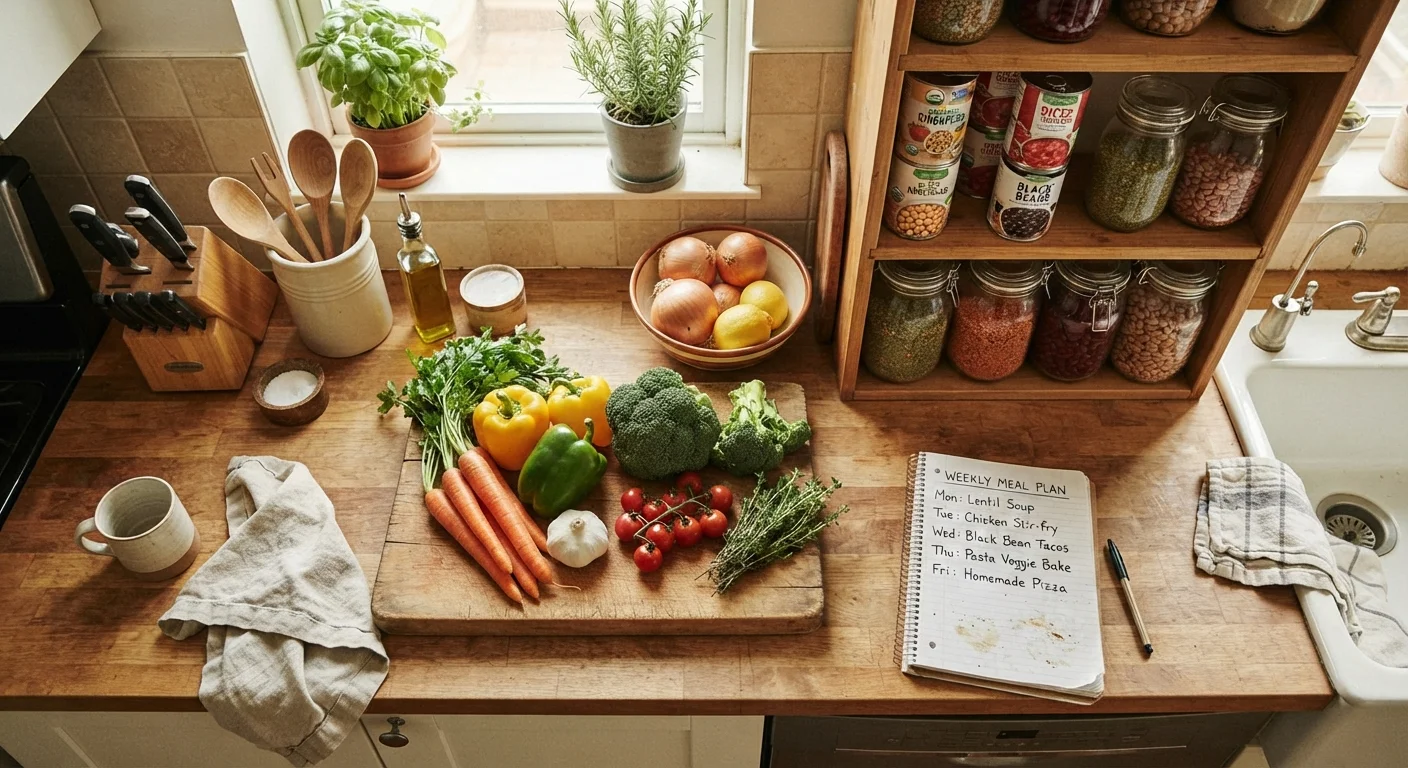
Build a weekly meal plan before writing your shopping list
Planning meals first means every item on the list has a job. It eliminates duplicate purchases, reduces impulse additions, and makes it easier to spot ingredients that can serve more than one meal during the week.
Check unit prices rather than package prices
Larger packages are often cheaper per ounce, but not always. Store-brand and mid-shelf items frequently undercut name-brand equivalents at the same or smaller size. The unit price label on the shelf tag is the only reliable comparison.
Anchor at least three dinners per week to inexpensive plant or egg proteins
Beans, lentils, tofu, and eggs cost far less per gram of protein than most cuts of beef, pork, or chicken. Rotating them into the weekly menu reduces the grocery total without eliminating meat entirely.
Shop the store perimeter and the canned-goods aisle with intention
The center aisles hold the highest-margin processed products. Canned tomatoes, beans, fish, and broth in the canned-goods aisle are shelf-stable, low-cost staples that belong in any budget kitchen.
Cook larger portions than a single meal requires
The time and energy cost of cooking does not scale linearly. Doubling a recipe takes only marginally more effort and produces lunch or a second dinner at near-zero additional labor cost.
Protein is where the budget bends most
Meat is the single largest driver of grocery cost in most American households. Shifting even two or three dinners per week away from beef or pork toward eggs, legumes, or canned fish can meaningfully reduce the weekly total. A dozen eggs costs roughly $2 to $4 depending on the store and region; a can of chickpeas runs under $1.50 and extends a stew or curry for four people. For a deeper look, affordable proteins worth keeping in your kitchen covers the options with the strongest cost-to-nutrition ratio.
When buying meat, whole cuts and larger packages tend to have a lower per-pound price than pre-portioned or marinated products. Dividing and freezing a family pack of chicken thighs at home achieves the same convenience for less money. The freezer as a budget tool makes that strategy practical rather than burdensome.
Produce, seasonality, and the store layout
Produce prices drop when supply is high, which tracks with growing seasons. Tomatoes in August cost less than tomatoes in February because fewer miles and fewer controlled-storage days are involved. Understanding seasonal price rhythms lets families plan meals around what is cheap right now rather than what a recipe from a food blog happens to call for.
Frozen vegetables are harvested at peak and flash-frozen, so nutritional quality is comparable to fresh in most cases. For cooked applications, frozen spinach, peas, broccoli, and corn cost less per serving than their fresh equivalents and eliminate the spoilage risk. Stocking the freezer with a rotation of frozen vegetables gives weeknight cooking a reliable, inexpensive foundation.
Families with outdoor space might consider growing a few high-yield items. Herbs, tomatoes, and leafy greens produce a significant return relative to seed costs. Growing vegetables on a tight budget offers a practical starting point for first-time gardeners.
Batch cooking and the weekly time trade
Cooking once and eating multiple times is one of the most direct ways to lower per-meal cost. A pot of rice, a batch of roasted vegetables, and a large quantity of beans or ground meat cooked on Sunday can anchor four or five dinners without repeating the same meal. A family starter's roadmap for batch cooking walks through the logistics for households new to the approach.
Batch cooking also reduces the conditions that lead to takeout. When there is cooked food in the refrigerator at 6 p.m., the decision to order delivery becomes easier to skip. The real cost of a regular takeout habit breaks down how delivery fees and tips add to what looks like a modest menu price. For occasions when eating out is the plan, dining habits that actually reduce the restaurant bill covers what genuinely helps.
The content provided on our blog site traverses numerous categories, offering readers valuable and practical information. Readers can use the editorial team’s research and data to gain more insights into their topics of interest. However, they are requested not to treat the articles as conclusive. The website team cannot be held responsible for differences in data or inaccuracies found across other platforms. Please also note that the site might also miss out on various schemes and offers available that the readers may find more beneficial than the ones we cover.