

Summary
28 items · 1.5 to 3 hours
Why a room-by-room approach works better
Going room by room forces a systematic look at every surface, gap, and fixture where heat escapes or cold air enters. A general walk around the house often misses interior weak points: the attic hatch that sits slightly off-center, the dryer vent that never got a proper seal, or the basement rim joist that has no insulation at all. This checklist treats each space as its own audit, so nothing slips through.
Most of the items here involve materials that cost a few dollars and tasks that take under 30 minutes each. A handful will need a licensed contractor, and those are flagged clearly. If you rent your home, many of these steps still apply, though you will want to check your lease before making permanent changes. For ideas that work without altering the structure, see rental-friendly room upgrades that preserve your deposit.
Windows and doors
Attic and insulation
Basement and crawl space
Heating system
Kitchen and bathrooms
Exterior and roof
What you will need
Gather these supplies before you start so you are not making mid-task hardware runs. Prices vary by region and store, so treat the list below as a category guide rather than a specific shopping list.
Exterior caulk
Seals gaps around window frames, door frames, utility penetrations, and exterior siding joints.
Weatherstripping (foam and V-strip)
Fills movable gaps between doors and windows and their frames to stop drafts.
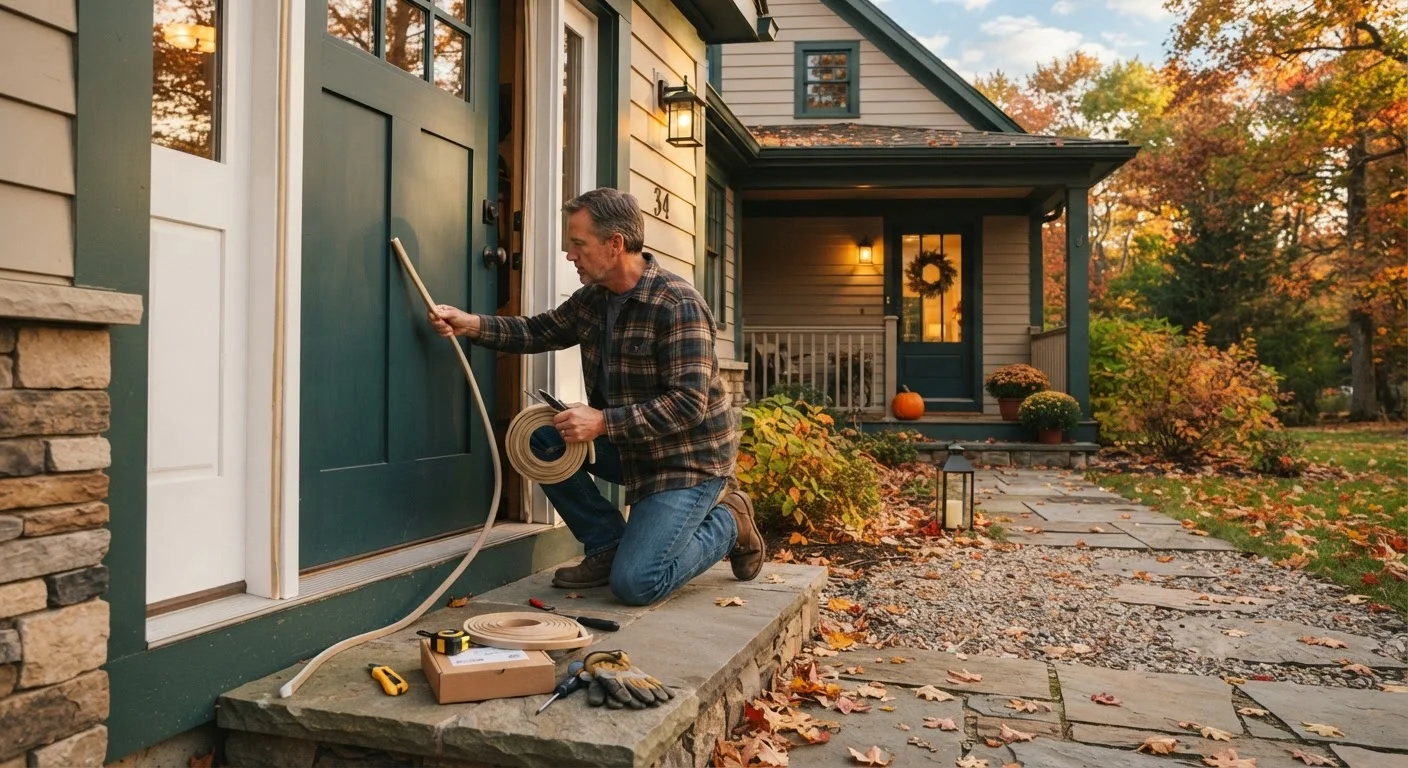
Door sweep
Attaches to the bottom of exterior doors to block cold air at floor level.
Expandable spray foam
Fills larger irregular gaps, especially around pipe and wire penetrations in the basement and attic.
Foam pipe insulation
Wraps exposed water pipes in unheated areas to reduce freeze risk.
Rigid foam board
Cuts to fit rim joist bays in the basement for effective insulation against heat loss.
Replacement furnace filter
Keeps the heating system running efficiently; check your unit's filter size before purchasing.
Interior window insulation film kit
Adds a temporary insulating layer to single-pane windows in rooms that stay cold.
Do not skip the gas and carbon monoxide checks
Before the heating season begins, test every carbon monoxide detector in your home and replace batteries even if the low-battery alert has not sounded. If you smell gas near your furnace, water heater, or any gas appliance, leave the home immediately and call your gas utility's emergency line from outside. Do not attempt to locate or repair a gas leak yourself.
Some insulation work needs a permit
Adding insulation in attics or crawl spaces may require a permit in some jurisdictions, and certain foam products have installation restrictions due to fire codes. Contact your local building department before beginning any substantial insulation project to confirm what is required in your area.
A note on permits, professionals, and safety
Several items in this checklist, particularly those involving gas appliances, electrical outlets on exterior walls, and structural insulation, may require permits or licensed tradespeople depending on your local building code. The U.S. Department of Energy recommends having a qualified technician inspect and service your heating system annually. For gas furnaces or boilers, do not attempt internal repairs yourself. Carbon monoxide detectors should be installed on every level of the home; replace any unit older than seven years.
Weatherproofing also intersects with home finances. If your home needs significant upgrades, it may be worth looking into available federal tax credits for energy efficiency improvements before starting larger projects. For broader financial planning around homeownership, review your household readiness before taking on major renovation debt.
This article is for general informational purposes only. Consult a licensed contractor or building professional for advice specific to your home's construction, local codes, and safety requirements.
The content provided on our blog site traverses numerous categories, offering readers valuable and practical information. Readers can use the editorial team’s research and data to gain more insights into their topics of interest. However, they are requested not to treat the articles as conclusive. The website team cannot be held responsible for differences in data or inaccuracies found across other platforms. Please also note that the site might also miss out on various schemes and offers available that the readers may find more beneficial than the ones we cover.