

Summary
22 items · 30 to 60 minutes
Why the freezer deserves a spot in your budget plan
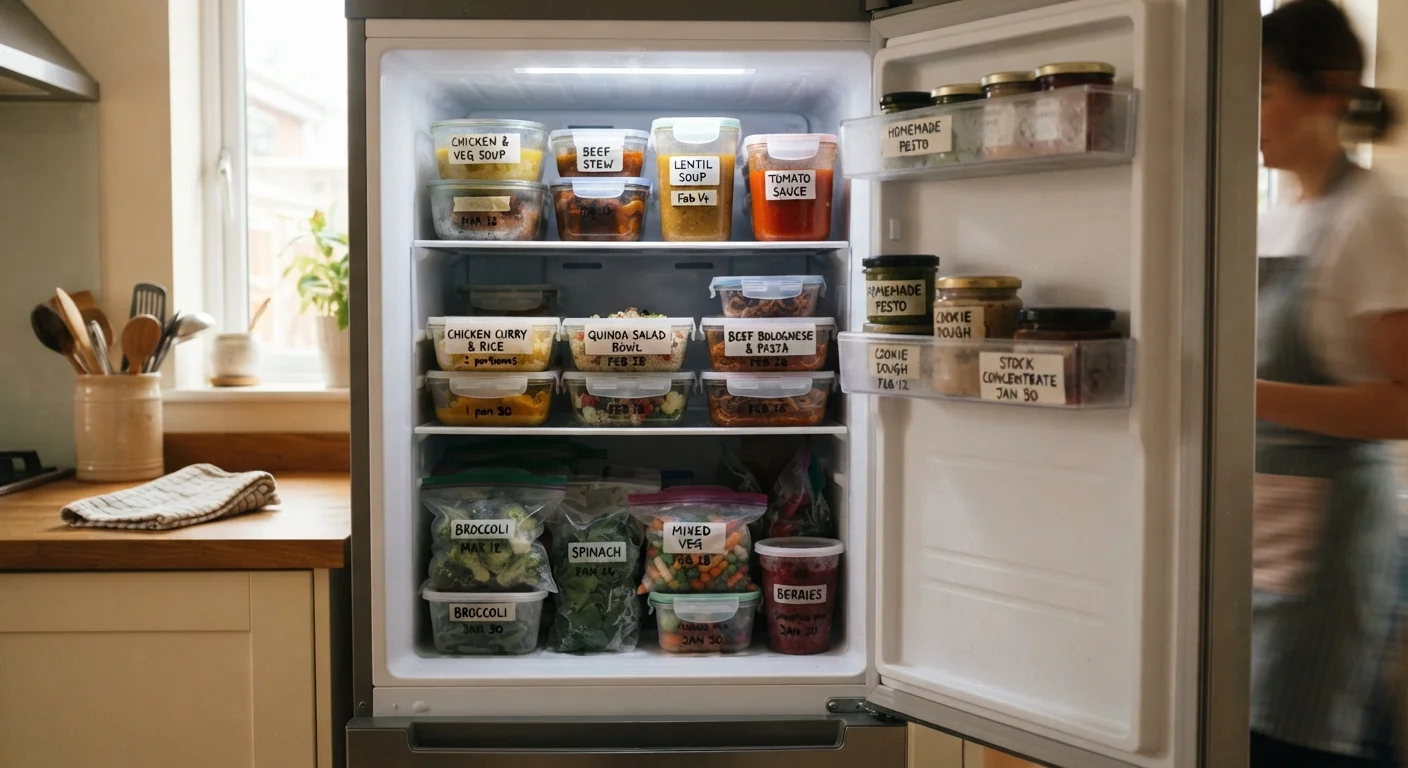
Most families treat the freezer as a holding space for leftovers and ice cream. Used deliberately, it functions as a price buffer: you buy proteins, produce, and batch-cooked meals when the cost is low, then draw on them during tighter weeks. That shift in thinking can reduce how often you shop and cut impulse spending at the same time.
The grocery stretching strategies that work long-term all assume some form of stock rotation. The freezer makes that rotation possible without relying on canned goods alone. For families tracking a household budget, consistent freezer use can smooth out the weeks when a paycheck comes late or an unexpected bill arrives.
The checklist below covers three areas: setting up the freezer correctly, knowing what to stock and for how long, and building the daily habits that prevent waste. Work through each group in order the first time, then revisit individual items as a monthly audit.
Freezer setup
Stocking and storage
Safe storage timelines
Habits that reduce waste and spending
What you need before you start
The tools below make the system work consistently. None require a large upfront cost, and most last for years.
Freezer-safe zip bags (quart and gallon sizes)
Store portioned proteins, vegetables, and soups with minimal air exposure to prevent freezer burn.
Rigid freezer containers
Hold liquids like soups and sauces without leaking or cracking at low temperatures.
Appliance thermometer
Verify your freezer holds 0 degrees Fahrenheit, since built-in dials are often inaccurate.
Permanent marker or freezer tape
Label every package with contents and freeze date so nothing becomes an unidentified mystery item.
Kitchen scale
Portion proteins by weight to match your typical recipe amounts before freezing.
Vacuum sealer
Remove nearly all air from packages to extend usable quality beyond what zip bags alone provide.
One habit that pays off quickly: portion proteins and soups into single-meal sizes before freezing. Thawing only what you need avoids the waste cycle that makes many families give up on batch cooking. If you want to go further with home food production, pairing freezer habits with a home vegetable garden gives you a steady supply of produce to blanch and freeze at no grocery cost.
Do not refreeze thawed raw meat
Raw proteins that have been fully thawed in the refrigerator should be cooked before refreezing, not returned to the freezer raw. Refreezing raw thawed meat does not cause immediate illness but degrades texture significantly and increases bacterial risk if any part of the thaw happened at room temperature. Cook first, then freeze the cooked portion.
High-moisture foods change texture when frozen
Dairy-heavy dishes (cream soups, dishes with sour cream or fresh cheese), cooked eggs, and raw salad greens do not freeze well. They become watery or grainy after thawing and are better used fresh. Knowing which foods to skip keeps you from wasting freezer space and ending up with an unappetizing result.
Common mistakes that cost money
Freezer mismanagement is one of the grocery behaviors that quietly adds up. Food frozen without proper sealing gets freezer burn within weeks, making it unpalatable and wasted. Storing items without labels leads to uncertainty, which leads to buying duplicates. And overpacking a freezer so that cold air cannot circulate raises both food spoilage rates and energy costs.
Families who want to connect freezer planning to broader nutrition goals will find useful framing in this guide on eating well on a tight grocery budget. The freezer does not solve poor meal planning on its own, but it removes several of the friction points that make planning break down.
The content provided on our blog site traverses numerous categories, offering readers valuable and practical information. Readers can use the editorial team’s research and data to gain more insights into their topics of interest. However, they are requested not to treat the articles as conclusive. The website team cannot be held responsible for differences in data or inaccuracies found across other platforms. Please also note that the site might also miss out on various schemes and offers available that the readers may find more beneficial than the ones we cover.