

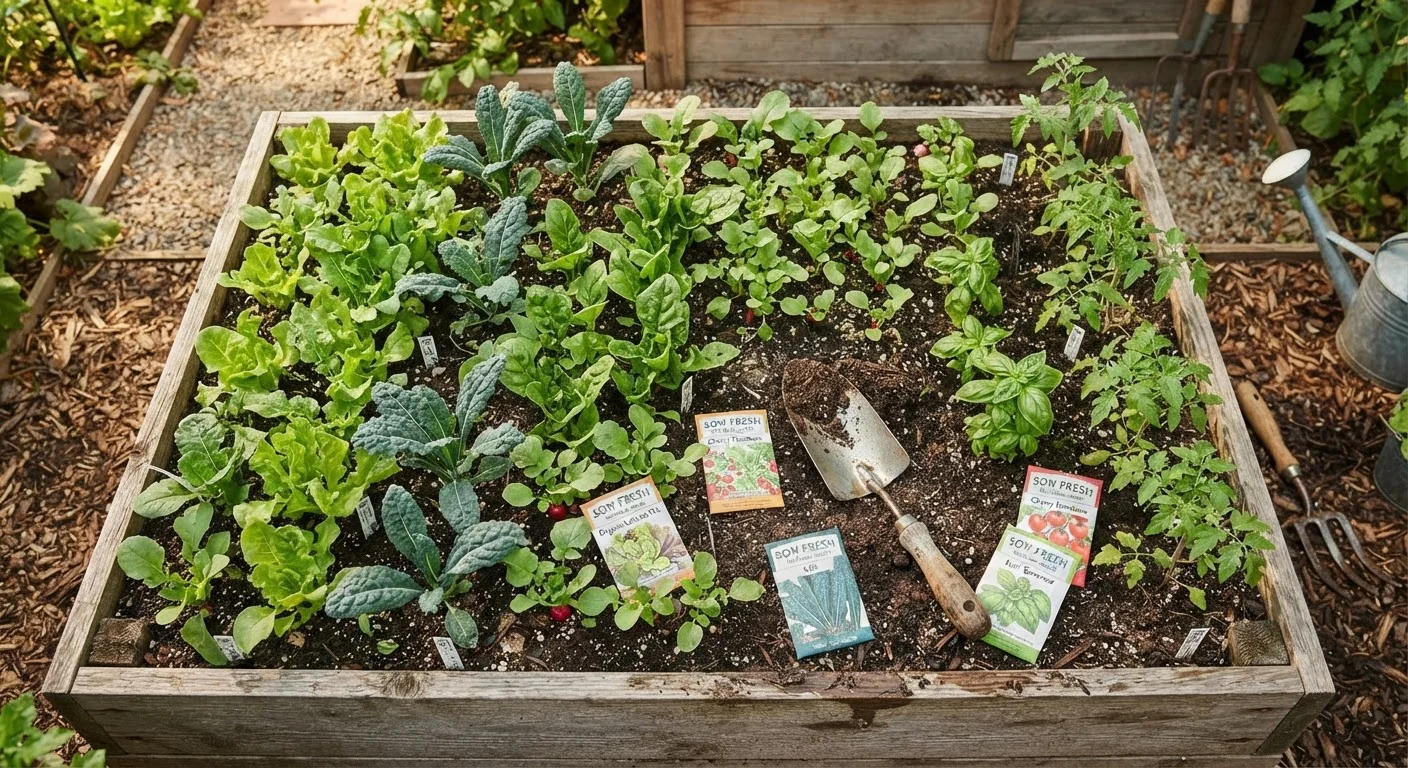
Choose crops that earn their space
Not every vegetable gives equal return for the effort and soil it occupies. Families on a tight budget get the most from crops that produce heavily over a long season. Zucchini, pole beans, cherry tomatoes, and Swiss chard will keep producing for weeks if harvested regularly. A single zucchini plant can yield 10 or more pounds over a summer. Contrast that with corn, which needs a large footprint for a single harvest, or artichokes, which take two years to produce.
Herbs also offer strong value. Basil, parsley, and cilantro cost $3 to $5 per bunch at the grocery store but grow abundantly from a few cents worth of seed. Planting what your family actually eats prevents waste and makes the garden feel worthwhile.
For households with limited outdoor space, container gardening makes high-yield crops like cherry tomatoes and herbs accessible on a patio or balcony.
Start from seed instead of transplants
Nursery transplants typically cost $3 to $6 per plant. A packet of the same variety costs $2 to $4 and contains 25 to 100 seeds. For families planting a full garden, buying transplants for every crop can add $50 or more to the setup cost before a single vegetable is harvested.
Starting seeds indoors 6 to 8 weeks before the last frost date requires no special equipment to begin. A sunny windowsill, recycled yogurt containers or egg cartons, and standard potting mix are enough to get tomatoes, peppers, and squash going. Seed-starting trays and grow lights help but are not required for a first attempt.
Start seeds in recycled household containers to cut upfront costs
Seed-starting trays and pots are convenient but not necessary. Reusing yogurt cups, egg cartons, or paper cups keeps material costs near zero and reduces plastic waste. Seeds germinate equally well in any container with drainage holes.
Water at the base of plants, not from overhead
Overhead watering wets foliage and promotes fungal diseases like powdery mildew and blight, which can destroy a crop before it produces. Directing water to the soil at the root zone uses less water and keeps plants healthier without any added cost.
Mulch beds with free or low-cost materials
A 2- to 3-inch layer of mulch holds soil moisture, suppresses weeds, and moderates soil temperature. Reducing watering frequency and weed-pulling time both translate to savings in time and, where water is metered, money.
Plant successive small batches instead of one large planting
Sowing all lettuce or radishes at once produces more than a family can eat before it bolts or spoils. Planting a short row every 2 to 3 weeks keeps harvests manageable and reduces food waste.
Collect and store rainwater for irrigation
A rain barrel connected to a downspout captures runoff that would otherwise drain away. For families with metered water, using stored rainwater for garden irrigation can noticeably reduce summer water bills.
Community seed libraries, often run through public libraries or cooperative extension offices, let families borrow seeds at no cost. The only requirement is returning seeds from your harvest at the end of the season.
Build soil fertility without buying fertilizer
Purchased fertilizers and bagged compost add up across a season. Building soil at home through composting costs almost nothing and produces a material that improves drainage, feeds soil microbes, and reduces the need for any purchased amendments.
A basic compost pile needs three things: carbon materials (dry leaves, cardboard, paper), nitrogen materials (vegetable scraps, grass clippings), and moisture. Turning the pile every week or two speeds decomposition. A modest pile can produce usable compost in 2 to 3 months during warm weather.
Pairing homegrown produce with efficient food habits compounds the savings. The strategies for stretching a grocery budget work well alongside a productive garden because both reduce the total amount spent on food.
Save seeds to eliminate recurring costs
Open-pollinated and heirloom varieties produce seeds that grow true to the parent plant. Saving seeds from tomatoes, beans, peppers, and squash means the garden can largely replant itself the following year. Hybrid varieties labeled F1 do not reliably produce offspring that match the parent, so check seed packets before saving.
Drying seeds completely before storage prevents mold. A paper envelope in a cool, dry drawer keeps most vegetable seeds viable for 2 to 4 years. Labeling with the variety name and harvest year takes seconds and prevents confusion at planting time.
Reducing food spending works across multiple habits. Families who combine a productive garden with strategies like using the freezer strategically can preserve surplus produce and extend the garden's value well past the growing season.
The content provided on our blog site traverses numerous categories, offering readers valuable and practical information. Readers can use the editorial team’s research and data to gain more insights into their topics of interest. However, they are requested not to treat the articles as conclusive. The website team cannot be held responsible for differences in data or inaccuracies found across other platforms. Please also note that the site might also miss out on various schemes and offers available that the readers may find more beneficial than the ones we cover.