

Start here
Why containers work for small spaces
Next
Choosing the right containers
Then
Soil, drainage, and watering basics
When you're ready
What to grow and when
Fine-tune
Sunlight and placement
Save money
Keeping costs down
Why containers work for small spaces
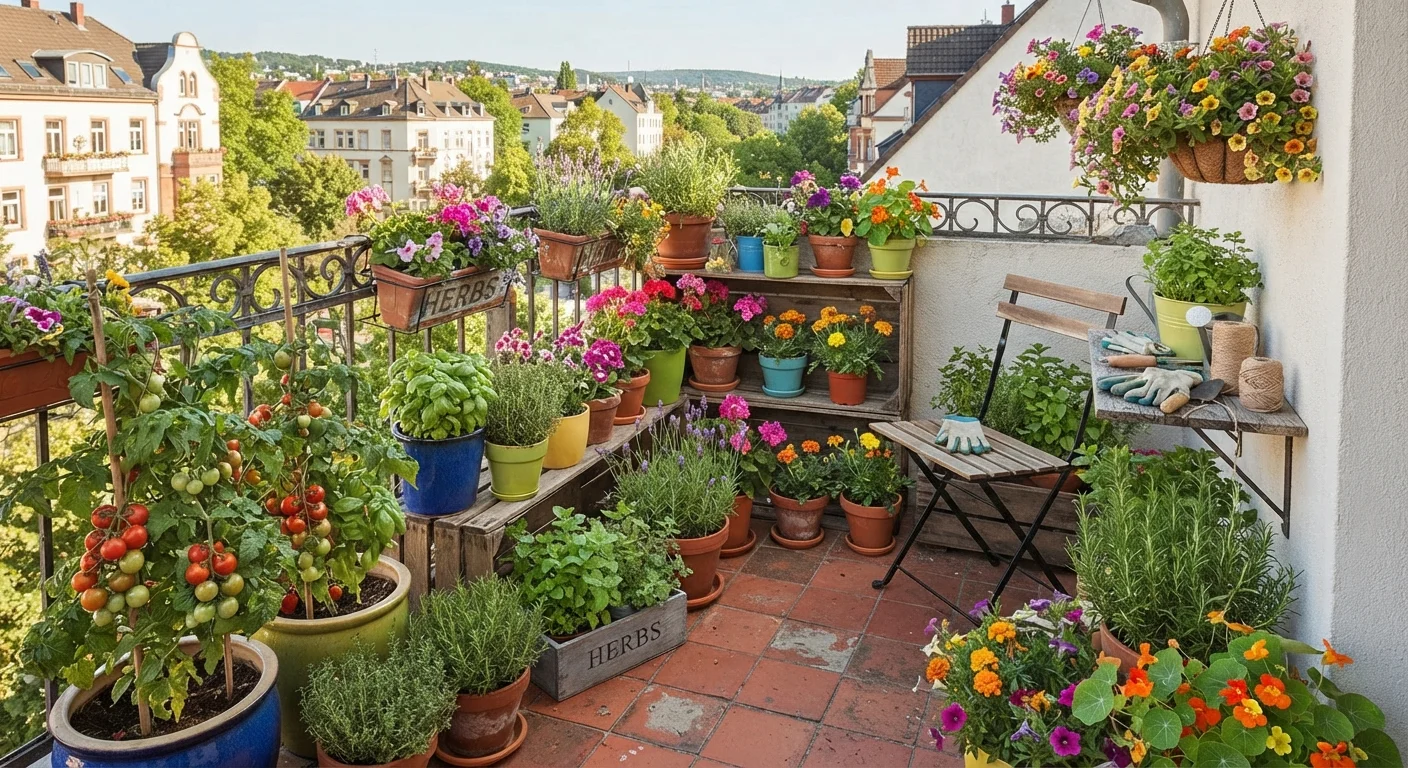
A balcony, a narrow stoop, or a small concrete patio does not have to stay bare. Containers let you garden on any hard surface, move plants to follow sunlight, and avoid the soil problems that frustrate in-ground gardeners in urban settings. They also give renters a way to garden without altering property, since everything goes with you when you move.
The flexibility of container gardening also means you can start small, with two or three pots, and expand as your confidence grows. There is no large upfront investment in raised beds, fencing, or soil amendment for a whole plot.
Potting mix
A growing medium formulated for use in containers. It contains materials like perlite or vermiculite to keep it loose and draining, and is distinct from garden soil or topsoil.
Determinate tomato
A tomato variety that grows to a fixed height, sets all its fruit at once, and stops growing. These are generally better suited to containers than indeterminate (vining) types.
Drainage hole
An opening at the base of a container that lets excess water escape. Without one, water collects at the bottom and causes root rot.
Cool-season crop
A vegetable or herb that grows best in mild temperatures, generally between 45 and 65 degrees Fahrenheit. Examples include lettuce, spinach, kale, and radishes.
Root circling
A condition where roots grow in a spiral pattern around the inside of a container because they have run out of space. It can restrict water and nutrient uptake if left uncorrected.
Choosing the right containers
Size matters more than material. A container that is too small stresses roots, dries out fast, and limits yields. As a general rule, herbs do fine in pots six to eight inches deep. Leafy greens need eight to ten inches. Tomatoes, peppers, and squash need at least five gallons of volume, and more is better.
Plastic and resin pots cost less and hold moisture longer than terra cotta. Terra cotta breathes well and can prevent overwatering, but it dries out faster and needs watering more often. Fabric grow bags drain well and resist root circling; they collapse flat for storage between seasons. Any container works as long as it has drainage holes at the bottom.
Avoid very dark-colored pots in hot climates. Dark containers absorb heat and can cook roots during peak summer afternoons.
Soil, drainage, and watering basics
Garden soil from the yard does not belong in containers. It compacts into a dense block that suffocates roots and prevents water from moving through. Use a commercial potting mix labeled for containers. Many include slow-release fertilizer; if yours does not, add a granular balanced fertilizer at planting time.
Every container must have at least one drainage hole. Water sitting at the bottom causes root rot within days. If you want to use a decorative pot without holes, place a smaller drilled pot inside it and lift the inner pot out to drain after each watering.
A simple drainage layer is not necessary
Many gardening guides recommend placing gravel or stones at the bottom of a container to improve drainage. Research from horticulture programs has shown this actually raises the water table inside the pot and can worsen drainage rather than improve it. Fill the entire container with potting mix and rely on proper drainage holes instead.
Containers dry out faster than garden beds because they have less soil volume and more surface area exposed to sun and wind. In warm weather, check pots daily and water when the top inch of soil is dry. Water until it runs freely from the drainage hole, which ensures the entire root zone gets moisture rather than just the top layer.
What to grow and when
Vegetables and herbs that produce the most usable food for the space they occupy are the practical choice for container gardens. Herbs such as basil, chives, parsley, and mint produce continuously when harvested regularly and fit in small pots. Lettuce and spinach grow quickly, tolerate partial shade, and can be harvested leaf by leaf over several weeks.
Compact tomato varieties, bush cucumbers, and dwarf pepper plants are bred for container growing and produce reasonable harvests without the sprawling habit of full-size plants. Radishes and green onions mature in as few as three to four weeks, which makes them useful for filling gaps between larger plantings.
Cool-season crops (lettuce, spinach, kale, radishes) go in early spring and again in late summer for a fall harvest. Warm-season crops (tomatoes, peppers, basil, cucumbers) wait until nighttime temperatures stay above 50 degrees Fahrenheit. Growing your own herbs and salad greens can reduce how much you spend at the store. For more ways to connect a home garden to everyday food costs, see strategies for stretching a grocery budget.
Sunlight and placement
Before buying a single pot, track how many hours of direct sun your space gets. Stand outside at mid-morning, midday, and mid-afternoon and note where the sun falls. Six or more hours of direct sun supports fruiting vegetables. Four to six hours works for leafy greens and most herbs. Fewer than four hours limits you mainly to mint, parsley, and a few shade-tolerant greens.
Group containers together to reduce moisture loss and create a slightly more humid microclimate around the plants. Put taller plants on the north side of a grouping so they do not shade shorter ones. Casters or plant dollies let you rotate pots to follow the sun or bring tender plants indoors before a frost without lifting heavy containers.
Keeping costs down
Starting from seed rather than buying transplants cuts the cost of filling containers by a large margin. A single seed packet typically costs $2 to $4 and contains enough seeds for multiple seasons. Transplants for a few tomato or pepper plants can run $5 to $8 each at garden centers.
Reuse containers each year. At the end of the season, remove spent plants, dump the old potting mix into a compost pile or garden bed, clean the pot with a dilute soap-and-water solution, and store it. Fresh potting mix costs less than replacing pots annually. Top-dressing with compost between seasons partly refreshes the mix and reduces how much new product you need to buy.
Saving seeds from non-hybrid (open-pollinated) varieties is another way to reduce recurring costs. If you want to go further with productive, low-cost growing, growing a vegetable garden on a tight budget covers seed-starting and composting in more detail.
Frequently Asked Questions
Most vegetables and herbs need six to eight hours of direct sun per day. Leafy greens and herbs like parsley and cilantro can manage on four to five hours. Fruiting plants such as tomatoes, peppers, and cucumbers need the full six to eight hours to produce well.
Garden soil is not a good fit for containers. It compacts quickly in a pot, which restricts root growth and blocks drainage. A quality potting mix contains materials like perlite and peat or coir that keep the medium loose and well-aerated over the growing season.
Check containers daily in warm weather; small pots can dry out in a single afternoon. A simple test is to push your finger one inch into the soil. If it feels dry at that depth, water thoroughly until it drains from the bottom.
Compact or determinate tomato varieties need at least a five-gallon container, though a ten-gallon pot produces better results. Standard or indeterminate types need at least fifteen gallons. Larger containers dry out less quickly and give roots more room, which reduces stress on the plant.
Yes. Frequent watering flushes nutrients out of potting mix faster than garden soil loses them. A balanced slow-release fertilizer applied at planting, followed by a liquid fertilizer every two to three weeks during the growing season, supports consistent growth.
Lettuce, spinach, radishes, bush beans, and herbs such as basil, chives, and mint are forgiving for beginners. They do not need large containers and grow quickly, so you can see results within weeks of planting.
The content provided on our blog site traverses numerous categories, offering readers valuable and practical information. Readers can use the editorial team’s research and data to gain more insights into their topics of interest. However, they are requested not to treat the articles as conclusive. The website team cannot be held responsible for differences in data or inaccuracies found across other platforms. Please also note that the site might also miss out on various schemes and offers available that the readers may find more beneficial than the ones we cover.