

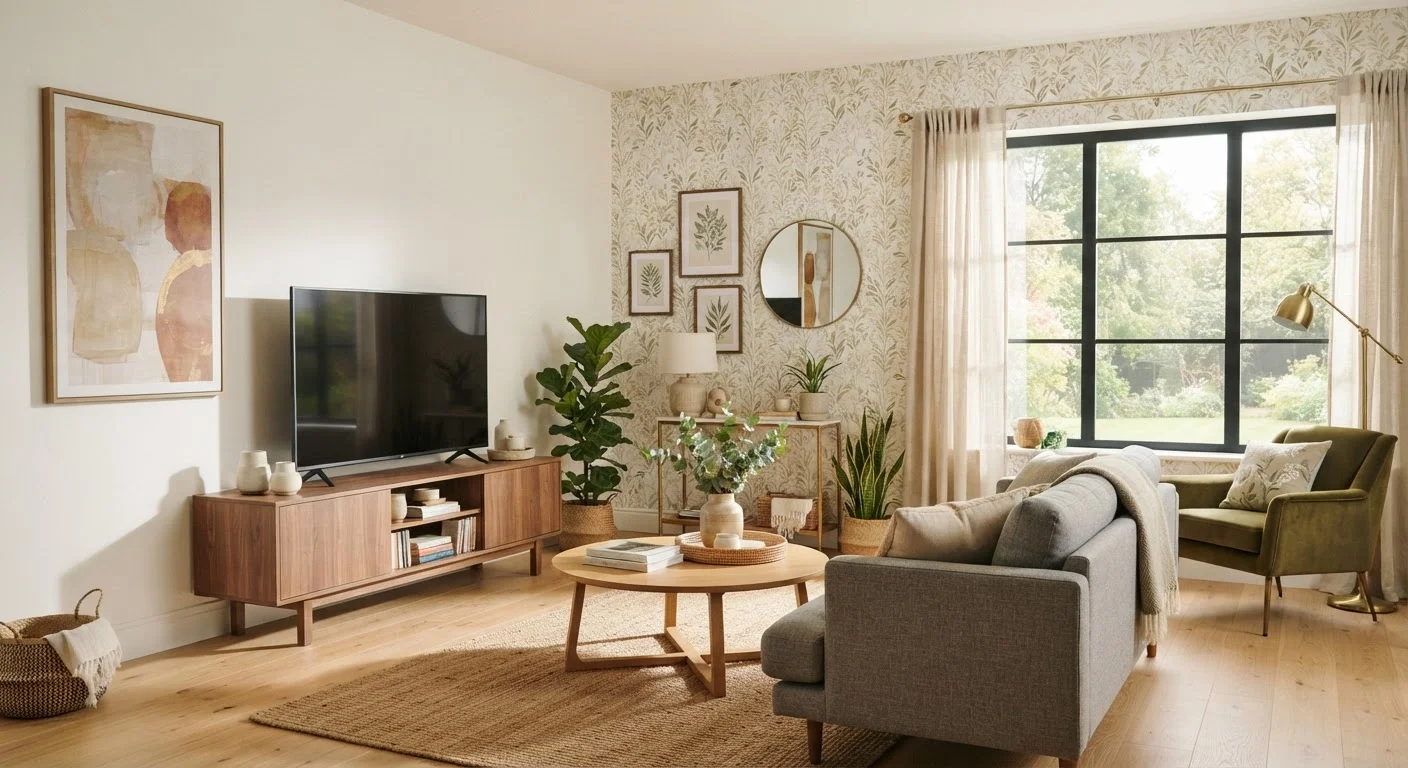
Option A
Paint
The faster, lower-cost wall treatment for most rooms.
Best for: Homeowners and renters who want a quick, affordable refresh with easy color changes down the road.
Option B
Wallpaper
The durable, pattern-rich option for rooms where longevity matters.
Best for: Owners willing to invest more upfront for a long-lasting decorative finish in low-humidity, low-traffic areas.
Cost breakdown: what you actually spend
Paint runs roughly $25 to $60 per gallon for a mid-range interior formula, and a typical 12-by-12-foot room needs one to two gallons. Add primer, a roller kit, and tape, and a DIY paint job in one room usually lands between $75 and $150 in materials. Labor, if you hire out, can add $200 to $500 or more depending on your region and the condition of the walls.
Wallpaper costs more at every step. Standard rolls cover roughly 25 to 30 square feet, and a single room can require eight to twelve rolls. At $30 to $80 per roll for a mid-grade product, material costs alone reach $240 to $960 before you buy paste, a seam roller, or a smoothing brush. Professional installation frequently adds $1 to $7 per square foot. That same 12-by-12 room could run $500 to $1,500 installed.
The gap narrows when you factor in repainting cycles. Paint in a high-traffic room may need refreshing every three to five years. Wallpaper, installed correctly in a stable environment, can go 10 to 15 years without replacement. Over a ten-year horizon the per-year cost can be comparable, though the higher upfront number remains a real barrier for families on a tight budget.
| Criterion | Paint | Wallpaper |
|---|---|---|
| Material cost (avg. room) | $75 to $150 | $240 to $960 |
| Typical lifespan | 3 to 7 years | 10 to 15+ years |
| DIY difficulty | Low to moderate | Moderate to high |
| Moisture resistance | Good (semi-gloss/satin) | Variable by product |
| Reversibility | Easy | Difficult with paste |
| Pattern and texture options | Limited to color/finish | Extensive |
| Touch-up ease | Simple with leftover paint | Difficult to match |
Room-by-room: where each option makes sense
Living rooms and dining rooms
These rooms tolerate wallpaper well because humidity is low and walls are not regularly scrubbed. A single feature wall in wallpaper with the remaining three walls painted is a cost-conscious way to get visual interest without papering the entire space. Paint alone works fine here too, and a second coat in a deeper color is far cheaper than any wallpaper project.
Bedrooms
Bedrooms are the lowest-risk environment for wallpaper. Moisture is minimal, and the walls are rarely touched. Children's rooms are an exception: growing kids change their taste quickly, and repainting every few years costs less than stripping and replacing wallpaper. For adults who plan to stay in a home long-term, wallpaper in a primary bedroom is one of the more defensible uses of the higher upfront cost.
Kitchens and bathrooms
Both rooms produce steam, grease, and splashes. Semi-gloss or satin paint tolerates this well and wipes clean easily. Standard wallpaper, even with a vinyl coating, can trap moisture behind it and promote mold growth over time. Moisture-rated vinyl wallpaper exists, but installation requires careful sealing at edges and seams. For most families, paint is the lower-risk and lower-cost path in these spaces.
Entryways and hallways
High-contact areas take scuffs and hand marks. Paint is easier to touch up with a small brush, while wallpaper damage is harder to repair invisibly. A durable eggshell or satin paint finish in a hallway tends to hold up better than wallpaper over several years of daily use.
DIY feasibility and time
Painting a room is one of the more approachable DIY tasks in home improvement. Prep work - filling holes, taping trim, and laying drop cloths - takes a few hours, and most people can apply two coats in a day. The DIY vs. hiring a handyman guide covers when that calculation shifts and professional help becomes the smarter financial move.
Wallpaper is harder to hang without prior experience. Matching pattern repeats, keeping seams straight, and working around outlets and corners requires patience and the right tools. Bubbles and misaligned seams are difficult to fix after the paste dries. Many homeowners who attempt wallpaper as a first-time project end up calling a professional to fix or finish the job, which erases the savings from going DIY. Starting with a single, small accent wall in a room with few obstacles is a reasonable way to build the skill before tackling a full room.
Renters and reversibility
If you rent, standard paint with landlord approval is generally the safest refresh. Removable peel-and-stick wallpaper has improved in quality and is worth considering for accent walls, though results vary by product and surface texture. For a broader look at low-impact upgrades, the rental-friendly room upgrades guide covers options that protect your deposit while still personalizing your space.
Traditional paste wallpaper in a rental is a significant financial risk. Removal can damage drywall, and repair costs often exceed the original decorating budget. Owners who plan to sell within a few years face a similar concern: personal wallpaper choices can limit buyer appeal, while a fresh coat of neutral paint is widely considered one of the more reliable ways to present a home for sale.
The content provided on our blog site traverses numerous categories, offering readers valuable and practical information. Readers can use the editorial team’s research and data to gain more insights into their topics of interest. However, they are requested not to treat the articles as conclusive. The website team cannot be held responsible for differences in data or inaccuracies found across other platforms. Please also note that the site might also miss out on various schemes and offers available that the readers may find more beneficial than the ones we cover.