

Our Verdict
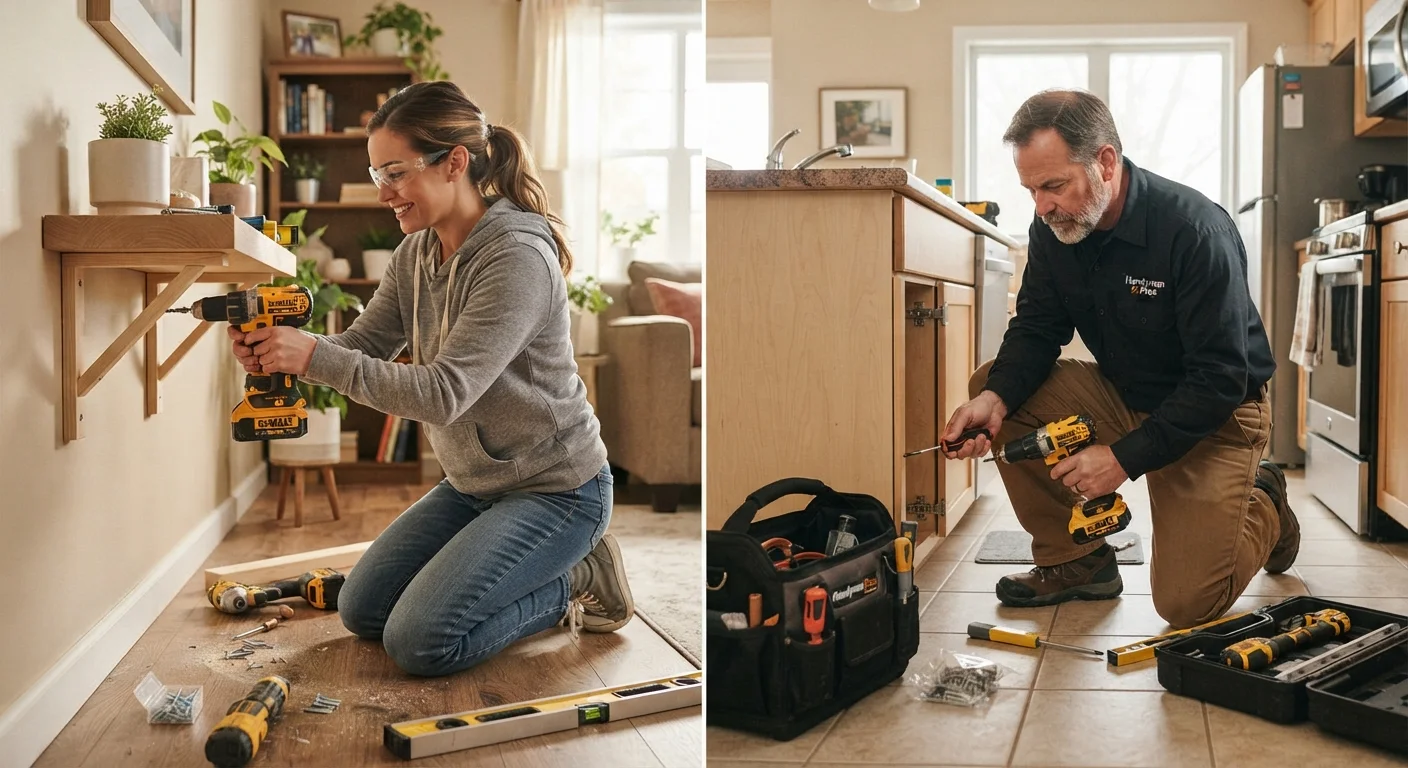
DIY consistently pays off on cosmetic, repetitive, and low-stakes maintenance tasks where mistakes are cheap to fix. A handyman earns the fee on anything involving water supply lines, load-bearing elements, electrical panels, or work that requires a permit. Matching the job to the right approach is where the real savings come from.
| Best for | Recommended |
|---|---|
| Homeowners comfortable with basic tools and cosmetic repairs | DIY |
| Tasks where an error would cause water, structural, or electrical damage | Hiring a handyman |
| Recurring maintenance jobs done multiple times a year | DIY |
| Work requiring permits, inspections, or licensed tradespeople | Hiring a handyman |
The real cost calculation behind each option
When a repair comes up, the instinct to save money by doing it yourself is reasonable. But the actual savings depend on four factors: material cost, tool cost, time, and the price of fixing a mistake. Miss any one of them and the calculation shifts.
For most cosmetic work, DIY clears all four hurdles comfortably. Patching a small drywall hole, repainting a room, re-caulking a tub, or replacing a showerhead are tasks where materials are inexpensive, the required tools are basic, and an imperfect first attempt costs little to redo. A handyman charging $75 to $150 per hour to do any of those tasks will almost never be the cheaper option.
The math flips on specialized jobs. A homeowner who buys a tile saw, cement board, and adhesive to retile a bathroom floor for the first time is often spending more than a handyman quote, before accounting for the time spent on a slow learning curve. As a general principle, one-off jobs that require specialized tools rarely save money via DIY. Recurring tasks, where you amortize tool cost over multiple uses, are a different story. This connects to broader thinking about recurring costs covered in ongoing homeownership expenses.
Jobs that consistently reward DIY
The tasks below share a common profile: low material cost, no permit requirement, forgiving margin for error, and skills that transfer to future jobs.
- Interior painting and touch-ups
- Caulking around tubs, sinks, and windows
- Replacing outlet covers, light switch plates, and cabinet hardware
- Installing light fixtures on existing circuits (always turn off the breaker first; if you are unsure about wiring, stop and call a licensed electrician)
- Patching small drywall holes up to about six inches
- Replacing a toilet flapper or filling valve
- Weatherstripping doors and windows
- Cleaning gutters and downspouts
These jobs also build skills that compound. A homeowner who learns to patch drywall patches it a dozen times over the years. The same is true for painting. If you want to stretch a home refresh budget further, see paint vs. wallpaper cost comparisons for room-by-room guidance.
Build a basic home repair kit first
A modest investment in core tools, a drill, level, stud finder, caulk gun, and a basic socket set, makes most DIY maintenance tasks accessible. Buying quality versions of these once costs less over time than repeated rentals. Many hardware stores also rent specialized tools by the day for tasks you will only do once.
Jobs where hiring out typically costs less overall
The case for a handyman is strongest when the downside risk is expensive. Water damage from a poorly fitted supply line can run into thousands of dollars. A wiring mistake on a circuit can create a fire hazard. These are not situations where a second attempt is a minor inconvenience.
Consider handing off:
- Any work involving gas lines (always requires a licensed professional)
- Main electrical panel work, subpanel additions, or new circuit runs
- Plumbing that ties into supply or drain lines inside walls
- Structural modifications, including removing walls without knowing load paths
- Roofing repairs at height without proper safety equipment and experience
- Work that requires a permit in your municipality
On permitted work specifically: a homeowner who skips a required permit to save on inspection fees may face fines, be required to tear out completed work for inspection, or encounter problems when selling the home. Verifying local permit requirements before starting any significant project is worth the time.
Unpermitted work can create serious problems
Work done without a required permit can result in municipal fines and mandatory removal of completed work. More practically, unpermitted improvements can complicate or derail a home sale if a buyer's inspector flags them. Always check with your local building department before starting structural, electrical, or plumbing projects. Requirements vary significantly by city and county.
How to compare quotes and DIY estimates honestly
Before deciding, build a realistic DIY estimate. List every material needed, look up current prices at a hardware store, add any tool you do not already own (or the rental cost), and estimate hours at a fair rate for your time. Compare that total to two or three handyman quotes.
A handyman quote that is 20 to 30 percent above your DIY estimate may still be worth it if the job is unfamiliar and a mistake would be costly. A quote that is more than double your honest material cost is worth scrutinizing, but may reflect specialized skill or liability coverage that has real value.
For renters, the calculation changes again. Many repairs are the landlord's responsibility, and unauthorized modifications can cost a security deposit. If you are in a rental and want to improve your space without risk, reversible rental upgrades are a better starting point than structural or fixture changes.
A side-by-side look at common repair scenarios
| Task | DIY cost (materials) | Handyman cost (approx.) | DIY skill needed | Risk if done wrong | |
|---|---|---|---|---|---|
| Interior wall painting | $50-$150 per room | $300-$600 per room | Low | Low (cosmetic only) | |
| Toilet flapper replacement | $5-$15 | $75-$150 | Low | Low (minor leak risk) | |
| Tile floor installation | $150-$400+ materials/tools | $400-$900 labor | Moderate to high | Moderate (cracking, uneven surface) | |
| Outlet or switch replacement | $5-$20 | $80-$150 | Low to moderate | High if wiring is misjudged | |
| Drywall patch (small hole) | $10-$30 | $100-$200 | Low | Low (cosmetic) | |
| Supply line plumbing repair | $20-$60 parts | $150-$350 | Moderate | High (water damage risk) |
The table above reflects general cost patterns. Actual costs vary by region, local labor rates, and the specific condition of your home. Getting a real quote from a local handyman before committing to a DIY project on an unfamiliar task is always a reasonable step, not a sign of indecision.
The content provided on our blog site traverses numerous categories, offering readers valuable and practical information. Readers can use the editorial team’s research and data to gain more insights into their topics of interest. However, they are requested not to treat the articles as conclusive. The website team cannot be held responsible for differences in data or inaccuracies found across other platforms. Please also note that the site might also miss out on various schemes and offers available that the readers may find more beneficial than the ones we cover.