

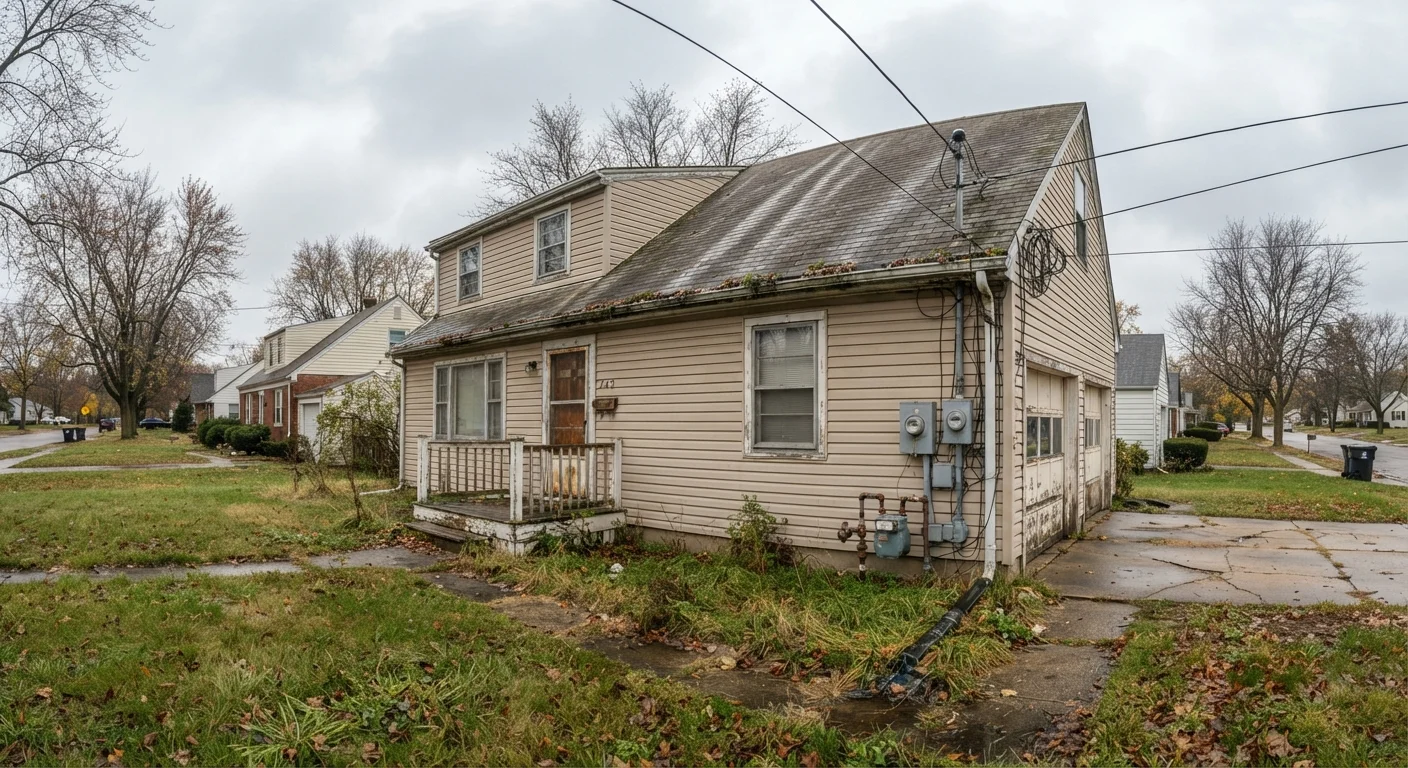
Why the mortgage payment is just the beginning
First-time buyers typically spend months focused on down payments, mortgage rates, and closing costs. Those are real numbers with deadlines attached, so the attention makes sense. What gets less scrutiny is the stack of recurring costs that begin the moment ownership transfers.
Property taxes, homeowner's insurance, and any homeowners association (HOA) dues are billed separately from the mortgage in most cases, though some lenders bundle them into escrow. A buyer who compares their expected mortgage payment to their current rent payment is leaving a significant portion of the true monthly cost out of the comparison. In many U.S. markets, property taxes alone add $200 to $600 or more per month, depending on the assessed value and local tax rate.
Utility costs also shift. Larger square footage, older insulation, and responsibility for outdoor spaces like irrigation systems push monthly utility spending well above what most renters paid. Budget-tracking data consistently shows that new homeowners underestimate monthly utility costs by a wide margin compared to their rental experience.
Do not skip a professional home inspection
A home inspection is one of the few pre-purchase steps that directly predicts future costs. Buyers who waive inspections in competitive markets may inherit HVAC systems near end-of-life, outdated electrical panels, or foundation issues that were not visible during a showing. The cost of an inspection, typically $300 to $500, is small relative to the repair bills it can reveal or prevent.
Escrow estimates can be adjusted mid-year
If your lender collects property taxes and insurance through an escrow account, your monthly payment can increase if either cost rises. Lenders conduct annual escrow analyses and may raise your payment with relatively short notice. Factor in some cushion when calculating affordability so a tax reassessment does not create a cash-flow problem.
Common myths about homeownership costs
Several beliefs about home expenses are widely held and consistently wrong. The myth-and-fact pairs below address the most consequential ones for first-time buyers.
Myth
Once I own the home, my monthly housing cost is locked in.
Fact
Property taxes, insurance premiums, and HOA fees all fluctuate over time and are outside the homeowner's direct control.
A fixed-rate mortgage locks in principal and interest, but those are only two components of total housing cost. Property tax assessments are reviewed periodically by local governments and frequently rise as neighborhood values increase. Homeowner's insurance premiums have risen sharply in many regions as insurers adjust for weather-related claims. An HOA can raise dues or levy a special assessment for shared repairs. Buyers who budget only for the mortgage payment often find their total monthly cost climbing within the first few years of ownership.
Myth
Renting costs more than owning when you factor in building equity.
Fact
Owning carries costs that offset equity gains, and the financial comparison depends heavily on local markets, holding period, and individual circumstances.
Equity growth is real, but so are the costs that reduce net gains: mortgage interest (which dominates early payments), property taxes, insurance, maintenance, and transaction costs when selling. In the early years of a mortgage, the majority of each payment goes toward interest rather than principal. A homeowner who sells within five years often nets less than expected once closing costs and transaction fees are subtracted. The rent-vs.-own calculation is genuinely market-dependent and should be modeled with real local numbers, not general assumptions. For those approaching a refinance decision, this household readiness checklist covers factors worth reviewing first.
Myth
New homes do not require much maintenance.
Fact
New construction has a warranty period, but many systems and finishes still require routine upkeep from the first year of ownership.
Builder warranties typically cover structural defects for ten years and systems like HVAC and plumbing for one to two years. Cosmetic issues, grading problems that cause drainage trouble, and settlement cracks are common in new builds during the first few years. Landscaping, caulking, and gutter cleaning are immediate owner responsibilities regardless of how new the home is. Owners of new construction who assume zero maintenance costs during the warranty period often find they have accumulated deferred cosmetic and exterior work by the time year three arrives.
Myth
A home emergency fund and a maintenance budget are the same thing.
Fact
Emergency funds cover sudden failures. Maintenance budgets cover planned, routine upkeep. Both are necessary and should be funded separately.
Treating these as one pool leads to a predictable problem: routine maintenance spending drains the emergency fund, leaving nothing in reserve when a water heater fails or a tree comes down in a storm. A practical approach keeps a maintenance budget, sized around 1% of home value annually, for scheduled tasks such as HVAC servicing, gutter cleaning, and exterior painting. A separate emergency reserve, commonly suggested at three to six months of housing costs, handles unplanned system failures. Conflating the two categories consistently leaves homeowners financially exposed when multiple needs arise at once.
Myth
Utility costs will be about the same as what I paid renting.
Fact
Utilities in an owned home are typically higher, often substantially so, due to larger square footage, older systems, and outdoor water use.
Rental apartments are usually smaller, more recently weatherized, and share walls that reduce heating and cooling loads. An owned single-family home with an older HVAC system, an attached garage, a basement, and a lawn can push monthly utility costs 40% to 60% above a prior rental bill. Water use for irrigation alone can add $50 to $150 per month during summer months in drier climates. Prospective buyers can request 12 months of utility bills from the seller during the due diligence period, which gives a far more accurate baseline than guessing.
The compounding problem of deferred maintenance
One cost pattern that catches new owners off guard is how quickly neglected maintenance escalates. A roof with a few missing shingles is a $300 repair if caught early. Left unaddressed, water intrusion can mean $8,000 to $20,000 in structural and drywall damage. The same logic applies to HVAC filters, caulking around windows and tubs, and gutters packed with debris.
Homeowners who treat maintenance as optional until something breaks tend to face repair bills that are two to five times larger than they would have been with routine upkeep. Scheduling a seasonal walkthrough, even an informal one, is one of the more practical habits a new owner can build. For a fuller look at which tasks reward the DIY approach versus when to call a professional, see this guide to DIY vs. hiring a handyman.
Budgeting $50 to $150 per month into a dedicated home maintenance fund, separate from an emergency savings account, gives owners a practical buffer that prevents small issues from turning into debt.
Building a realistic ongoing budget
A workable framework is to count the mortgage, taxes, insurance, and HOA fees as fixed monthly costs, then add a maintenance reserve equal to about 1% of the home's value annually. A $300,000 home, for example, calls for roughly $3,000 per year, or $250 per month, set aside for maintenance and minor repairs.
Variable costs, including utilities, pest control, lawn care, and appliance upkeep, should be estimated based on the home's age, size, and condition before purchase, not after. Many of those figures are available through a home inspection report, which itemizes aging systems and deferred items. Reviewing that report with an eye toward five-year replacement timelines, not just immediate repairs, gives buyers a much clearer picture of true long-term cost.
For perspective on how hidden costs accumulate in other areas of family spending, the patterns described in this look at takeout spending habits and this overview of grocery budget leaks follow a similar logic. Small recurring expenses, invisible individually, add up to significant annual totals.
The content provided on our blog site traverses numerous categories, offering readers valuable and practical information. Readers can use the editorial team’s research and data to gain more insights into their topics of interest. However, they are requested not to treat the articles as conclusive. The website team cannot be held responsible for differences in data or inaccuracies found across other platforms. Please also note that the site might also miss out on various schemes and offers available that the readers may find more beneficial than the ones we cover.