

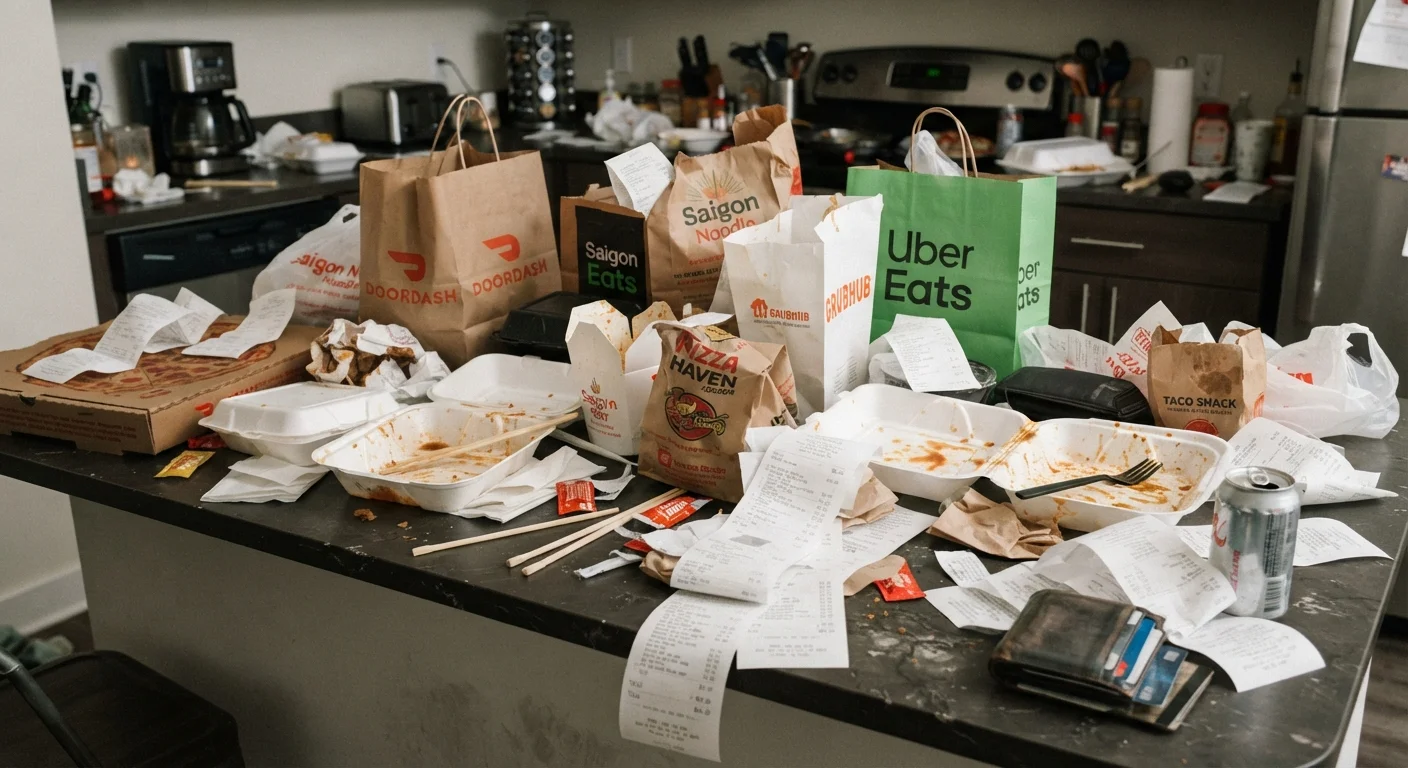
Why takeout costs more than the menu price
The menu price is just the starting number. By the time a family of four completes a typical app-based delivery order, the real total includes a delivery fee (often $3 to $8), a service fee charged by the platform (commonly 10 to 15 percent of the subtotal), a suggested tip for the driver (another 15 to 20 percent), and sometimes a small-order surcharge if the cart falls below a threshold. A $45 food subtotal can land at $65 or more before a single bite.
Most families do not run that math in the moment. The checkout screen shows the additions separately, which makes each one feel small. Collectively, they are not. For context on where food spending fits within a broader household budget, the finance overview has useful grounding on everyday money habits.
Treating the menu price as the full cost of the order.
Why it happens: App interfaces display the food subtotal prominently and add fees at checkout, so the additions feel like afterthoughts rather than part of the total.
Underestimating how often the family actually orders.
Why it happens: Each individual order feels like a one-off decision made in the moment, so the cumulative monthly picture is rarely visible without deliberate tracking.
Ignoring portion differences between delivery and dine-in.
Why it happens: Many restaurants serve slightly smaller portions for delivery, partly due to packaging constraints and partly because the experience is designed differently. Customers rarely notice because they are not comparing side by side.
Paying subscription fees for delivery platforms without using them enough to break even.
Why it happens: Subscription plans are marketed around the per-order savings on delivery fees, which makes them feel like automatic wins. Families sign up during a high-ordering stretch and keep paying during slower months.
Ordering for the whole family during peak surge pricing.
Why it happens: Busy weekend evenings or bad-weather nights are exactly when families most want delivery, and also when platforms are most likely to apply higher fees or longer wait times.
The mistakes families keep making
These patterns are common, and recognizing them is the first step to spending more deliberately on takeout.
~$1,200
Estimated annual family takeout spend above menu price
Based on typical platform fees and tips added to three orders per week for a family of four, at average US delivery order values.
30-50%
Fees and tip added above food subtotal
Delivery fee, platform service fee, and a standard tip together commonly add this range to a typical app-based order in US markets.
15%
Platform service fee on many major apps
Several large US delivery platforms charge a service fee calculated as a percentage of the food subtotal, separate from the delivery fee.
For families who want to compare what the same money buys at the grocery store, strategies for stretching a grocery budget lays out practical alternatives. And if eating out is still part of the plan, what actually saves money when dining out covers the habits that genuinely reduce the restaurant bill.
Impulse frequency is one of the hardest patterns to catch. Many families believe they order takeout once or twice a week, but when they check their credit card or app history for a full month, the number is often higher. A single unplanned Wednesday order, a Friday that ran late, a Sunday when no one felt like cooking: those add up fast. Tracking actual order frequency for one month, using the app's own order history, gives a clearer number than memory does.
Batch cooking is a direct counter to impulse ordering. A Sunday batch cooking guide walks through how to prep a full week of meals in one session, which removes the 6 p.m. scramble that triggers most unplanned orders.
The content provided on our blog site traverses numerous categories, offering readers valuable and practical information. Readers can use the editorial team’s research and data to gain more insights into their topics of interest. However, they are requested not to treat the articles as conclusive. The website team cannot be held responsible for differences in data or inaccuracies found across other platforms. Please also note that the site might also miss out on various schemes and offers available that the readers may find more beneficial than the ones we cover.