

Where the money actually goes
Families who budget carefully for flights and hotels are often caught off guard by everything else. The base costs get attention; the surrounding costs do not. A hotel room that looks affordable at $150 per night can finish closer to $210 once mandatory fees, parking, and taxes are added. Multiply that by five nights and the gap between planned and actual spending grows fast.
This pattern repeats across almost every category of travel spending. Understanding where the leaks tend to occur is the first step toward closing them. The mistakes below are common not because families are careless, but because the travel industry is structured to surface the low number first and disclose the full number later.
For a broader look at how unplanned spending adds up across a household, the American family budget framework is a useful companion to trip-specific planning.
Booking based on the advertised room rate without checking for mandatory add-on fees.
Why it happens: Hotels display the lowest possible nightly price in search results, and resort or amenity fees are disclosed only in the fine print during checkout.
Eating most meals at the airport, theme park, or hotel without a plan.
Why it happens: Families are tired, hungry, and time-pressed in these environments, and convenience wins over cost in the moment.
Waiting until arrival to book a rental car.
Why it happens: Families sometimes assume cars will be available on demand, or they delay to avoid a commitment in case plans change.
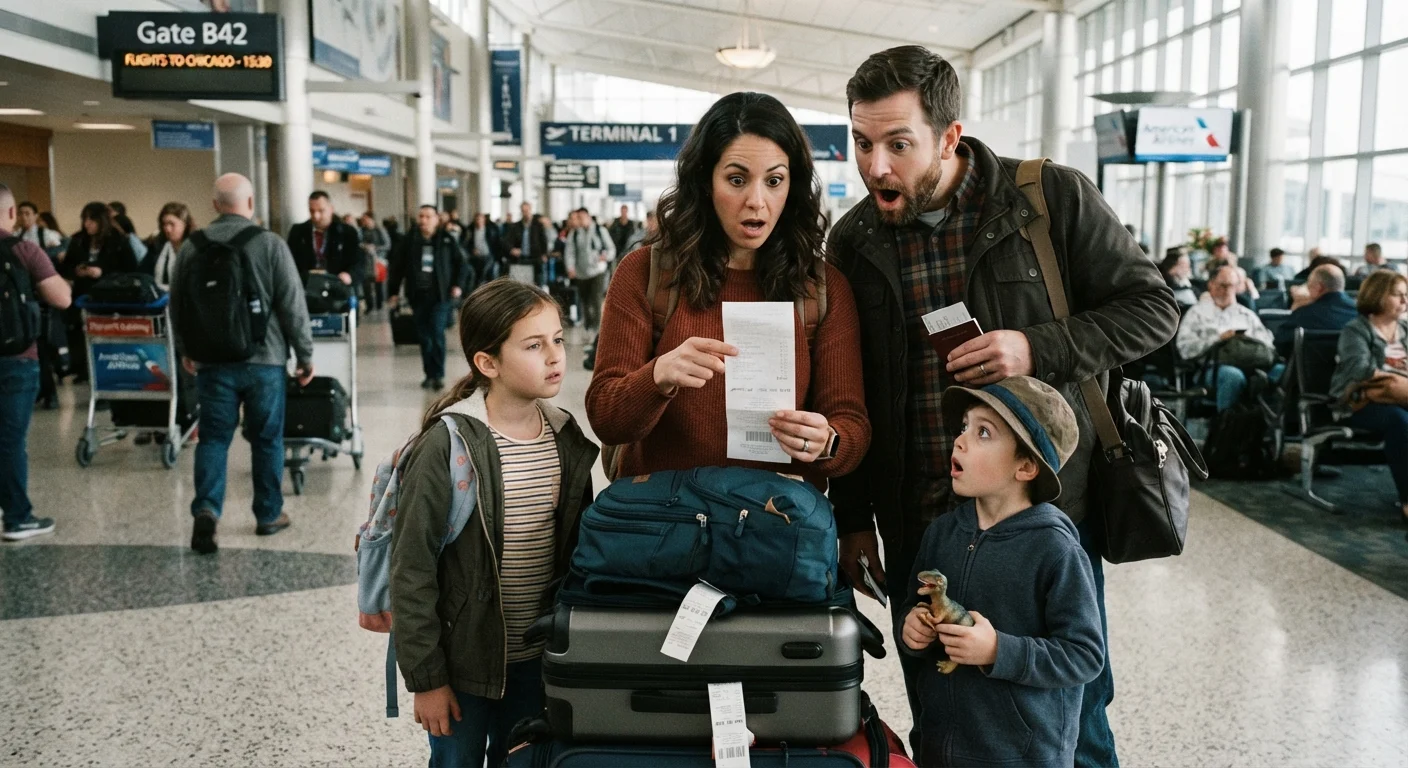
Ignoring baggage fees when calculating the true cost of airfare.
Why it happens: Budget and legacy carriers both display base fares that exclude checked bag fees, and families often realize the gap only at the gate.
Not accounting for parking fees at airports, hotels, or attractions.
Why it happens: Parking feels like a minor detail during trip planning, so families often skip it in their budget math.
Using a debit card or a card with foreign transaction fees for international spending.
Why it happens: Families assume their regular bank card works abroad without realizing each swipe carries a 2 to 3 percent fee, which compounds across a full trip.
How to build a realistic trip budget
A practical approach is to build the budget in two columns: the costs you can confirm before you leave, and the costs that are variable or easy to underestimate. The first column includes flights, accommodation totals (with fees), car rental, and any pre-purchased tickets. The second column covers food, incidentals, parking, tips, and activity spending on the ground.
Most families under-fund the second column by 30 to 40 percent. Adding a buffer of that size, or treating the second column as a firm daily cap, tends to prevent the surprise total at the end of a trip.
Resort fees are rarely optional
Many hotels, especially in Las Vegas, Miami, and Hawaii, charge mandatory daily resort fees that are not included in the advertised room rate. These fees can run $30 to $50 or more per night. Always search for the total nightly cost, including all fees, before comparing properties. The advertised rate alone tells you very little about what you will actually pay at checkout.
Families considering all-inclusive packages sometimes find that the bundled cost, despite appearing high upfront, removes many of the variable expenses that inflate conventional trip budgets. The trade-offs of all-inclusive resorts are worth reading before writing off that format entirely.
Timing also matters. Shoulder season travel can reduce both accommodation rates and crowd-related spending pressure, though it requires realistic expectations about weather and operating hours. For destinations closer to home, underrated domestic options often carry lower baseline costs and fewer of the fee structures common at heavily touristed resort areas.
The spending patterns that erode a travel budget are not unique to vacations. Similar dynamics appear in regular takeout spending and in grocery habits at home. Recognizing the pattern in one area makes it easier to spot in others.
The content provided on our blog site traverses numerous categories, offering readers valuable and practical information. Readers can use the editorial team’s research and data to gain more insights into their topics of interest. However, they are requested not to treat the articles as conclusive. The website team cannot be held responsible for differences in data or inaccuracies found across other platforms. Please also note that the site might also miss out on various schemes and offers available that the readers may find more beneficial than the ones we cover.