

Start here
What batch cooking actually means for families
Next
Planning your first batch cooking session
Then
A practical Sunday workflow
Apply it
Storing and using what you made
Troubleshoot
Common mistakes and how to avoid them
What batch cooking actually means for families
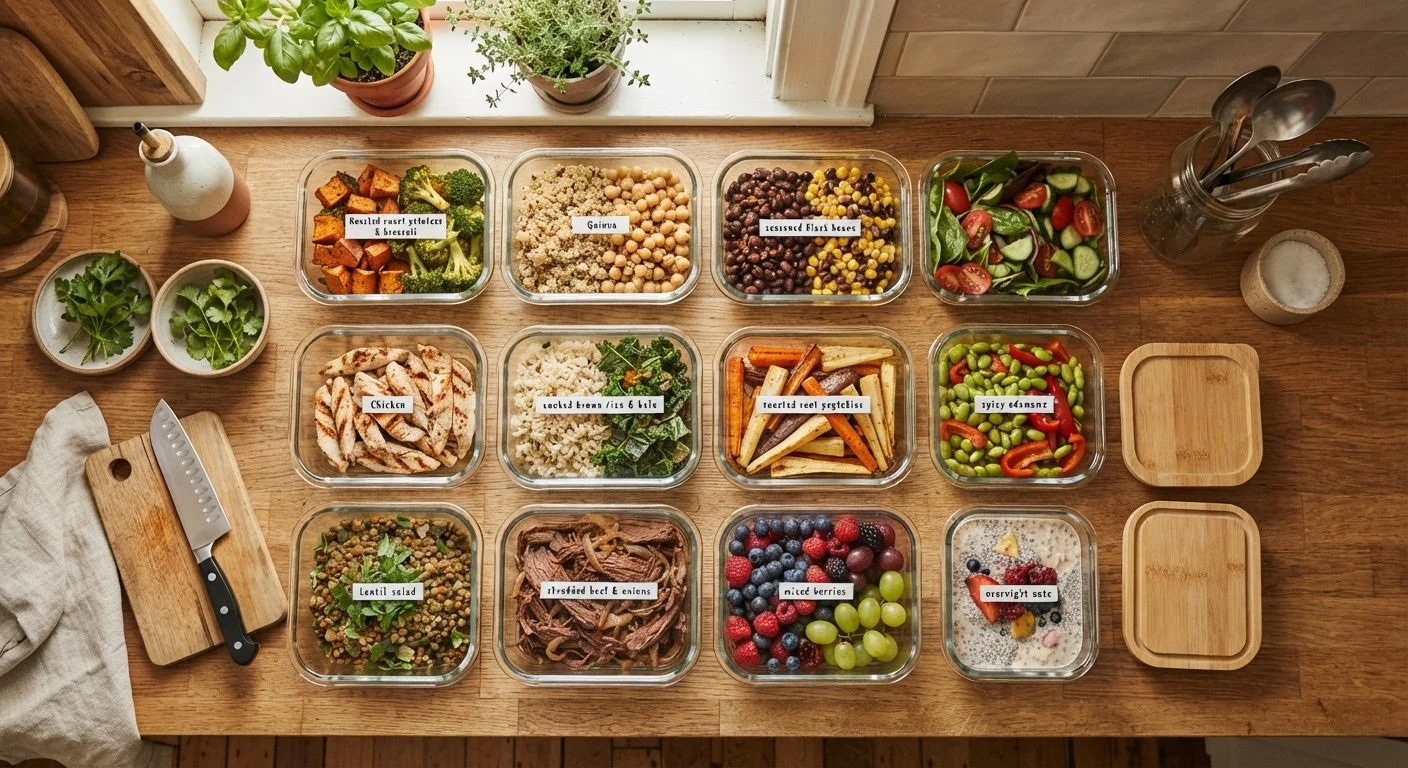
Batch cooking is not about making one giant casserole that everyone eats on repeat. It is cooking several simple, flexible components in a single session so weeknight meals come together in minutes rather than an hour. Think a pot of beans, a pan of roasted vegetables, a cooked grain, and a basic protein. Those four items can become tacos on Monday, grain bowls on Tuesday, and a quick soup on Thursday.
For families watching food costs, this approach has two real advantages. First, cooking larger quantities of inexpensive staples (dried beans, rice, oats, bone-in chicken) costs less per serving than buying convenience food or cooking small portions every night. Second, food waste drops because ingredients are actually used rather than forgotten in the back of the refrigerator. If you want to understand the broader picture of cutting food spending, see strategies for stretching your grocery budget.
Batch cooking is not meal-kit cooking
Batch cooking means cooking large quantities of simple, flexible components rather than preparing complete, finished dishes for every night. A pot of lentils, a tray of roasted sweet potatoes, and baked chicken thighs give you the parts to build tacos, grain bowls, soups, or wraps without eating the same meal twice.
Planning your first batch cooking session
The plan comes before the grocery list. Choose three or four meals for the week, then identify which ingredients overlap. A batch of cooked chicken thighs, for example, can go into pasta on one night and a rice bowl the next. Overlapping ingredients mean you buy less and cook less.
Write the week's meals on paper first
Before you buy anything, sketch out Monday through Friday dinners and any lunches you want covered. This takes about ten minutes and prevents the most common beginner mistake: buying ingredients that don't connect into actual meals. A written plan also makes the grocery run faster and cheaper.
When building your ingredient list, think in categories: one grain (rice, farro, or pasta), one legume (lentils, black beans, or chickpeas), two to three vegetables that roast well, and one protein. For a family of four, a typical Sunday session might cost between $30 and $50 in groceries depending on what proteins you choose and whether you use dried or canned legumes. Dried beans cost roughly half as much per serving as canned, though they need soaking time.
Batch cooking
Cooking large quantities of several dishes in one session so meals are ready to assemble quickly throughout the week.
Base ingredient
A versatile, simply cooked item (such as rice, beans, or roasted chicken) that can be used across multiple different meals.
Meal assembly
Combining pre-cooked components into a finished meal rather than cooking everything from scratch at dinner time.
Portioning
Dividing cooked food into individual or family-sized servings before storing, so reheating is straightforward and waste is low.
Refrigerator turnover
Using refrigerated food within the safe storage window (typically three to four days for cooked items) so nothing spoils before it gets eaten.
A practical Sunday workflow
Sequence matters more than speed. Start whatever takes longest first: dried beans or whole grains go on the stove right away, and a tray of root vegetables into the oven. While those run, chop everything else, mix any marinades, and season the protein.
A workable order for beginners:
- Soak dried beans the night before, or rinse canned beans and set aside.
- Preheat the oven to 400 degrees F and start your grain on the stovetop.
- Cut vegetables, toss with oil and salt, and get them into the oven.
- Season and cook the protein (baked chicken thighs or ground meat work well for beginners).
- While the oven and stove run, prepare any sauces, dressings, or toppings that will keep in the refrigerator.
- Once everything has cooled slightly, portion and store.
Two and a half to three hours covers this sequence comfortably for most families trying it the first time.
Storing and using what you made
Storage determines whether Sunday's work pays off. Airtight containers kept in a visible spot at eye level in the refrigerator get used; containers shoved to the back get forgotten. Label each container with the contents and the date you cooked it.
Do not refrigerate everything if the week is long
Cooked proteins and grains are generally safe in the refrigerator for three to four days. If your plan covers five or more days, freeze the portions you won't eat by Wednesday. Leaving cooked meat in the refrigerator beyond four days raises food safety risks. When in doubt, freeze sooner.
Portions you plan to eat Thursday or Friday should go straight into the freezer on Sunday. See the family freezer guide for specifics on what freezes well and for how long. For everything else, a clear schedule helps: grain-heavy meals Monday and Tuesday, protein-heavy meals Wednesday, anything close to its storage limit on Thursday.
Reheating works best with a splash of water or broth added to grains and beans before microwaving, which prevents drying out. Roasted vegetables reheat better in a skillet or oven than in a microwave if you have a few minutes.
Common mistakes and how to avoid them
Cooking too much variety is the most common beginner error. Five different full recipes on the first session leads to a chaotic kitchen and food that does not connect into actual meals. Three or four base components is the right starting point.
Skipping the cool-down step is another frequent problem. Putting hot food directly into sealed containers raises the internal temperature and can compromise food safety. Let cooked food cool for 20 to 30 minutes before sealing and refrigerating.
A third mistake is ignoring what the family will actually eat. Batch cooking a week of lentil stew when two family members dislike lentils creates waste, not savings. Before committing to a recipe, check that it works for everyone or that there is a simple alternative for picky eaters.
Families who want to reduce the temptation of takeout during the week will find the contrast interesting: what takeout actually costs per week is often higher than it looks once delivery fees and tips are included. Having refrigerator-ready meals removes most of that temptation on busy weeknights.
Frequently Asked Questions
Most beginners finish in two to three hours when cooking three or four dishes. The first session always takes longer because you are learning the sequence. By the third or fourth Sunday, two hours is realistic for the same output.
Most cooked proteins, grains, and roasted vegetables stay safe in the refrigerator for three to four days. For meals planned beyond that window, freeze portions on Sunday rather than refrigerating them.
Airtight containers made of glass or BPA-free plastic work well for both refrigerating and reheating. Uniform, stackable containers save space and make the week easier to organize. Avoid flimsy takeout containers for anything stored longer than a day.
It can be, mainly because buying ingredients in larger quantities often costs less per serving and food waste tends to drop. The savings depend on what you cook and how well you plan, but families who batch cook and follow a grocery list generally spend less per meal.
Yes. You can work with one pot, one sheet pan, and a cutting board in sequence rather than simultaneously. The process takes a little longer but the result is the same. Clearing counter space before you start makes a real difference.
Dried or canned beans, a pot of rice or another grain, roasted vegetables, and a simple braised or baked protein are the most forgiving starting points. These reheat well, combine into many different meals, and cost little per serving.
The content provided on our blog site traverses numerous categories, offering readers valuable and practical information. Readers can use the editorial team’s research and data to gain more insights into their topics of interest. However, they are requested not to treat the articles as conclusive. The website team cannot be held responsible for differences in data or inaccuracies found across other platforms. Please also note that the site might also miss out on various schemes and offers available that the readers may find more beneficial than the ones we cover.