

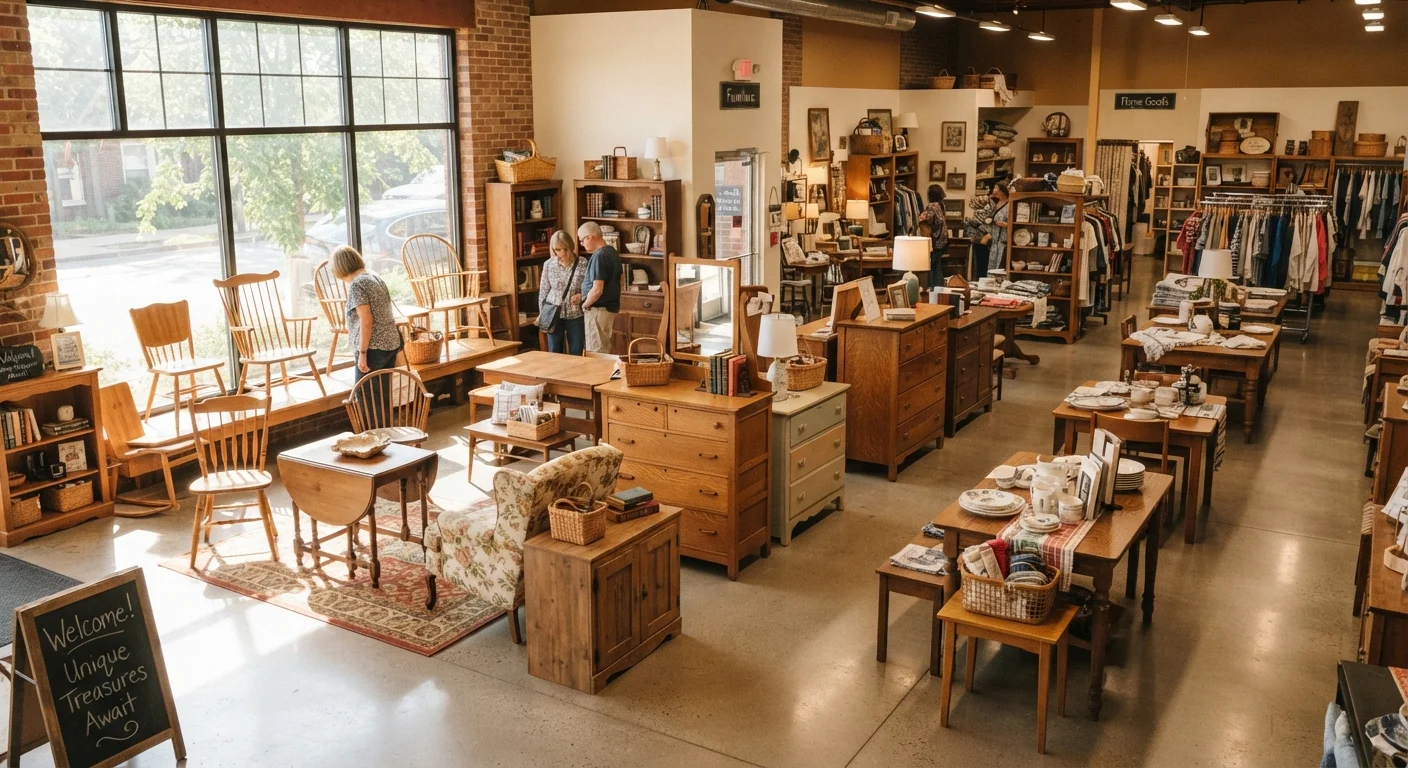
Pieces worth picking up
Solid wood furniture is the clearest win at a thrift store. Dressers, side tables, bookcases, and dining chairs made from real wood can last decades and respond well to light sanding or a fresh coat of paint. Check the joints: a tight, wobble-free frame is the sign of good construction. Loose joints can often be reglued, but that repair takes time and the right adhesive.
Hard-framed sofas and armchairs with removable cushions are also worth considering, especially if the frame itself is intact. The fabric or cushion fill is replaceable; a cracked or warped frame is not worth the trouble. Press down on the seat deck and feel whether the frame flexes or holds firm.
Metal furniture, including bed frames, shelving units, and occasional tables, tends to hold up well and is easy to clean. Surface rust on steel pieces is mostly cosmetic and can be treated with sandpaper and a rust-inhibiting primer before repainting. Aluminum pieces rarely rust at all.
| Best wood to look for | Oak, maple, pine, walnut (solid, not veneered over particleboard) |
| Typical thrift dresser price range | $10 to $75 depending on size and condition |
| Mattresses: buy secondhand? | No, health risk generally outweighs cost savings |
| CPSC crib standards | Federal standards updated; verify manufacture date and model number before purchasing any juvenile furniture (U.S. Consumer Product Safety Commission) |
| Wood-boring beetle indicator | Round exit holes 1-2mm wide, fine powdery dust nearby |
| Easiest repairs at home | Regluing joints, sanding and repainting, treating surface rust |
Mirrors and solid wood picture frames are also reliable finds. Glass can be replaced if cracked, and frames refinished cheaply. These items carry no structural risk and are simple to evaluate at a glance.
Items to leave on the shelf
Upholstered furniture without removable, washable covers deserves caution. Fabric sofas, mattresses, and stuffed ottomans can harbor allergens, mold, or pests that are difficult to detect by sight or smell alone. Mattresses are widely considered the highest-risk thrift purchase, and most health professionals recommend against buying them secondhand.
Particleboard or MDF furniture (the kind held together with cam locks and cardboard backing) rarely survives disassembly and reassembly intact. If a piece looks like it came flat-packed originally, inspect the edges: swollen, bubbling, or chipping veneer means water damage has already weakened the core.
Cribs, high chairs, and other juvenile furniture sold before current federal safety standards took effect may not meet current requirements. The U.S. Consumer Product Safety Commission (CPSC) updates crib and child furniture standards periodically, so any piece without a clear manufacture date and model number is hard to verify. When safety cannot be confirmed, skip it.
Wicker and rattan pieces can look appealing but often hide brittleness. Run your hand along the weave: if strands snap or feel dry and hollow, the structure is compromised. Outdoor resin wicker is more durable, but check that it has not become chalky or cracked from UV exposure.
See our guide on DIY vs. hiring a handyman for help deciding when a repair project is genuinely worth the effort.
How to inspect before you commit
Bring a small flashlight. Shine it under tables, along chair legs, and inside drawers. Look for small round holes (about 1-2mm) in wood, which can indicate wood-boring beetles. Check drawer interiors and the underside of upholstered cushions for dark spots, which may signal mold or moisture damage.
Smell matters. A musty or ammonia odor in fabric pieces is difficult to eliminate and usually means the item absorbed damage over a long period. Pet odors that have soaked into foam cushions rarely come out fully with surface cleaning.
Test all moving parts. Drawers should slide smoothly. Doors should hang straight. Chair legs should sit flat on the floor without rocking. A piece that already functions poorly will generally get worse with regular household use, not better.
Factor in the real cost before buying. A $15 thrift-store armchair that needs $40 in cleaning supplies, $25 in new cushion foam, and several hours of labor is not necessarily the deal it appears. Common shopping myths can lead buyers to overvalue a low sticker price without accounting for hidden costs.
Getting the most value over time
Thrift furniture works best as part of a deliberate furnishing strategy rather than impulse buying. Rooms built around one or two quality secondhand anchor pieces, supplemented with new smaller items, tend to hold together better than spaces filled entirely with whatever was available and cheap.
Knowing which product categories follow predictable discount cycles can also help. Seasonal sale patterns for furniture mean that new pieces occasionally drop to prices competitive with thrift stores, particularly around holiday weekends and end-of-model-year clearances.
Budget-minded home furnishing overlaps with broader household spending decisions. Families focused on stretching dollars across multiple categories may also find useful strategies in grocery budgeting content, since similar principles around evaluation, patience, and avoiding impulse purchases apply across most household spending.
The content provided on our blog site traverses numerous categories, offering readers valuable and practical information. Readers can use the editorial team’s research and data to gain more insights into their topics of interest. However, they are requested not to treat the articles as conclusive. The website team cannot be held responsible for differences in data or inaccuracies found across other platforms. Please also note that the site might also miss out on various schemes and offers available that the readers may find more beneficial than the ones we cover.