

How dynamic pricing actually works
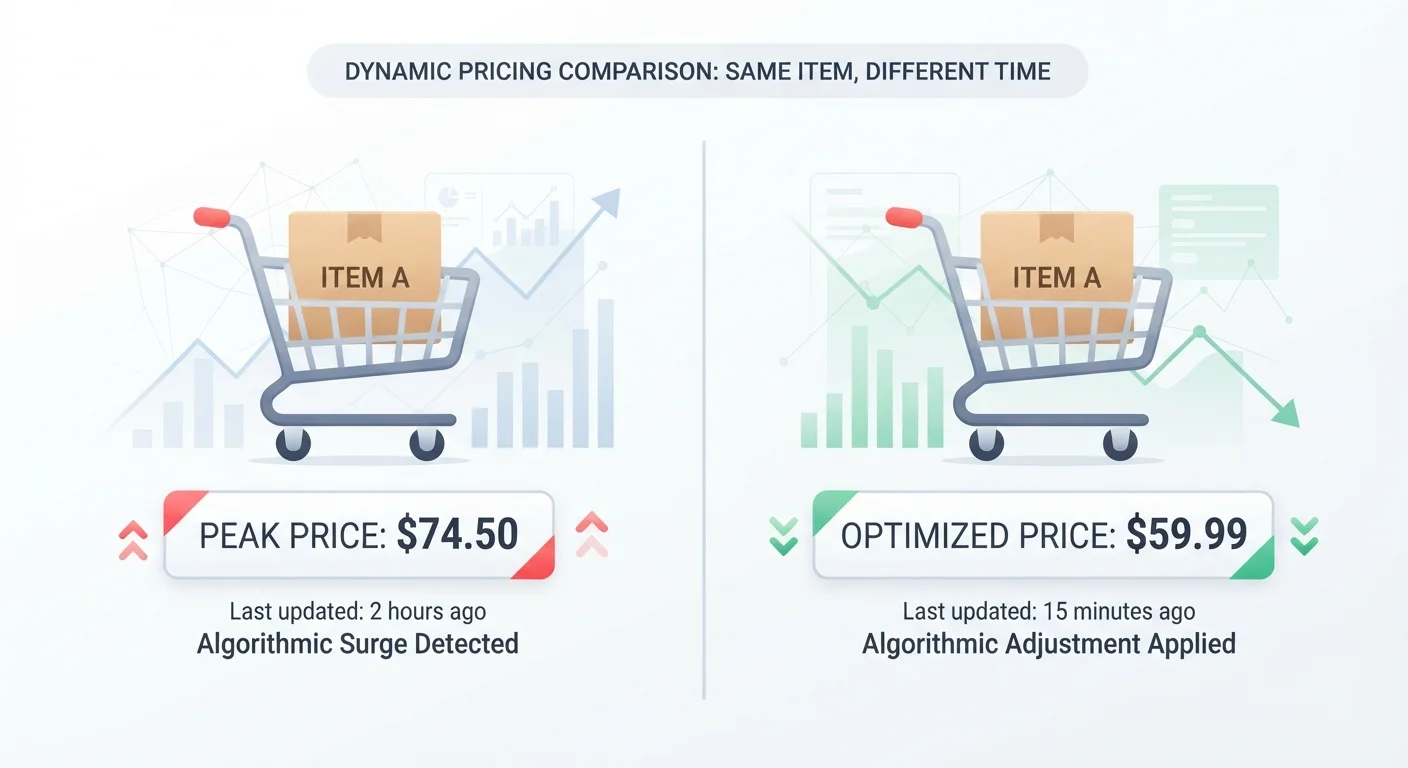
A retailer's pricing algorithm monitors several data streams at once: how many units are left in stock, what competitors are charging for the same product, how many shoppers are viewing that product page right now, and what time of day it is. When any of those signals shifts, the algorithm recalculates and posts a new price, sometimes within minutes.
This is not a manual process. Large e-commerce platforms can reprice millions of individual products in a day using automated systems. A product that costs $34.99 at 8 a.m. might be $39.49 by noon if a competitor sold out and demand spiked, then drop to $32.00 overnight when traffic is low.
The signals retailers use vary. Common ones include current page-view volume for the product, recent sales velocity, remaining inventory count, the prices currently posted on competing sites, and time-based patterns (weekends vs. weekdays, morning vs. evening). Some platforms also incorporate a shopper's individual data, which is covered in the next section.
Dynamic pricing is not the same as price errors
A sudden dramatic price drop is occasionally a retailer error rather than an intentional adjustment. Retailers typically reserve the right to cancel orders placed at erroneous prices, and they regularly do so. If a price looks unusually low relative to recent history, treat the purchase as uncertain until the order is confirmed and shipped.
Personalized pricing: when your browsing history affects your price
Beyond market-wide signals, some retailers use data tied to a specific user session or account. If you have viewed the same product five times over three days, that behavior signals high purchase intent. An algorithm may interpret that as willingness to pay more and hold the price steady or increase it slightly, while surfacing a discount to a first-time visitor.
Device type and location also appear in some personalization schemes. A shopper browsing on a high-end smartphone in a high-income zip code has, in some documented cases, been shown different prices than someone on an older Android device in a different region. Researchers have published findings on this practice in the context of airline and hotel booking sites, though the extent varies widely by retailer.
A practical response: use a private browsing window when you are seriously considering a purchase. Log out of your account. If the price differs from what you saw while logged in, that gap reflects personalized pricing at work. For travel purchases specifically, the hidden cost patterns that inflate trip budgets are worth reviewing alongside pricing behavior.
Practical ways to work around algorithmic pricing
Price-tracking browser extensions record a product's price history and display it as a chart when you visit the product page. That history shows whether today's price is genuinely lower than usual or whether a supposed sale is priced at roughly what the item has cost all year. This is one of the most reliable tools available to a value-conscious shopper because it replaces gut feeling with actual data.
Adding an item to your cart without purchasing is another approach some shoppers use. Retailers sometimes respond to cart abandonment with a follow-up email offering a discount. This does not work with all retailers and is not guaranteed, but it costs nothing to test.
Timing purchases around low-demand periods also helps. Mid-week, late-night browsing often surfaces lower prices than Saturday afternoon shopping for the same items, because fewer competing shoppers are active. For products that follow seasonal discount cycles, the seasonal price calendar for major product categories gives a useful framework for deciding when to wait.
When you have already found a lower price elsewhere, some retailers will honor it. Understanding what conditions actually apply before asking is worth the effort. See the full breakdown of price-matching policies for what to expect.
Check price history before you buy
Before purchasing any item above $30, spend 30 seconds looking up its price history using a browser extension or a dedicated price-tracking site. If the current price is near the historical high, waiting a few days or weeks may produce a meaningfully lower price. This single habit removes a significant amount of guesswork from online shopping.
Where dynamic pricing is most aggressive
Travel is the category where dynamic pricing has the longest history and sharpest fluctuations. Airfare can change dozens of times in a single day. Hotel rates for the same room on the same night can vary by 40% or more depending on how far in advance you book and how full the property currently is.
Consumer electronics follow a similar pattern around product launches and major sale events. A television priced at $599 in October may spike briefly above that during high-traffic sale days if inventory runs low, then settle lower again once the promotional period ends.
Grocery delivery platforms have also adopted dynamic pricing in some markets, where items priced for morning delivery may differ from the same items ordered in the evening. This is less widespread than in travel or electronics but worth verifying before placing a repeat order at an assumed price.
For families comparing unit costs across purchase sizes, when bulk buying actually saves money is a related question worth settling separately from dynamic pricing, since a bulk price that looks stable can still be priced dynamically against smaller-pack options.
Frequently Asked Questions
Yes, dynamic pricing is legal in the US. Retailers have broad discretion to set and change prices at any time. The practice becomes regulated only in specific contexts, such as price-gouging laws that apply during declared emergencies.
It is possible. Some retailers personalize prices based on browsing history, device type, or location. Shopping in a private or incognito browser window can sometimes surface a different price than a logged-in session.
Browser extensions and dedicated sites record the price of a product over time and display that history as a chart. When you view a product page, the tool shows you whether the current price is near a historical high or low, helping you decide whether to buy now or wait.
Clearing cookies or using a private browsing window removes stored session data, which can affect personalized pricing. Whether it produces a lower price depends on the retailer and the signals they use; it does not work consistently across all sites.
Yes. Travel pricing is one of the oldest uses of dynamic pricing. Airfare and hotel rates respond to seat or room availability, booking lead time, seasonal demand, and competitor rates. Prices generally rise as departure or check-in dates approach and available inventory shrinks.
The content provided on our blog site traverses numerous categories, offering readers valuable and practical information. Readers can use the editorial team’s research and data to gain more insights into their topics of interest. However, they are requested not to treat the articles as conclusive. The website team cannot be held responsible for differences in data or inaccuracies found across other platforms. Please also note that the site might also miss out on various schemes and offers available that the readers may find more beneficial than the ones we cover.